All posts by taggart@reiki-evolution.co.uk

Reiki teaching: tell them, tell them, tell them

reiki teaching advice: public speaking

In my recent blog “Reiki teaching: explain, guide, review” I ran through a simple sequence that you can follow when teaching practical exercises to your students.

In this blog I would like to talk about the information that you pass on, how to help the information to stick in your students’ minds, and how to ensure that new information relates to what has come before, and is put in proper context.

And in doing this, I will be relying on some very basic advice that is given to people who do public speaking. In fact, this is the most basic public speaking advice!

How to speak in public

When you give a talk to a group of people, you need to:

  1. Tell them what you are going to tell them
  2. Tell them
  3. Tell them what you told them

So you have an introduction where you run over the main themes or areas that you are going to be covering. This starts to give your listeners a ‘map of the territory’, it provides them with a set of main headings or categories, so when you move on to the next stage (‘tell them’) you can expand on those themes and headings. The listener already has some ‘hooks’ in their memory to add the new information to, so it makes sense, has somewhere to fit, and will be more memorable.

Finally, you tell them what you told them, which means that, after having explored the issues in detail, you conclude by bringing them back to the main themes, points, headings that you started with, leaving them with a final summary of your talk. They go away with the main themes clear in their minds.

In doing this, your listeners have received the same information three times, by way of the introduction, by you expanding on these themes in the main part of your talk, and by summarising things at the end. And we know that repeating your exposure to information, particularly when there is some overall structure, where the info relates to a number of clear themes or ideas, and ideally where the information is personally relevant to you or you can imagine how you might use the information in practice, makes that information much more memorable.

So how does this relate to talking to your Reiki students as you progress through their course?

How to make your Reiki course content memorable

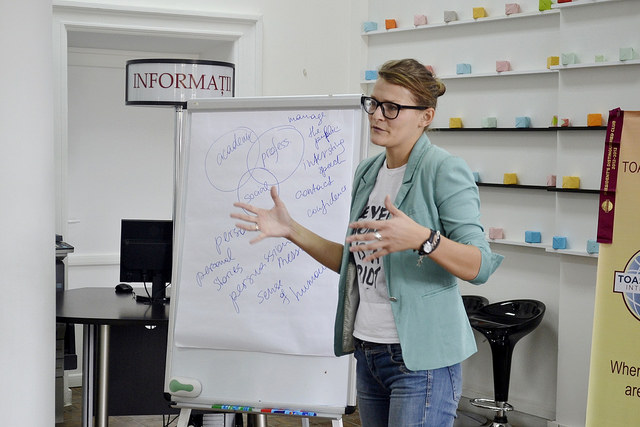
Well, you can explain to begin with what is going to be happening during their day, the big items, the main themes or headings. Tell them what they are going to learning about and practising in the morning, and what they will do in the afternoon. I know they will have seen your course schedule in advance but it’s a good idea to remind them on the day.

Then, whether you’re giving people a quick talk about ‘What Reiki is and where it comes from’ or ‘What Reiki can do for you and the people around you’, or whether you are introducing Hatsurei ho or explaining about scanning, you can follow the “tell them, tell them, tell them” sequence: outline the main points, expand on them and then summarise.

Outline, expand, summarise.

Then move on to the next chunk of your day.

Recapping after a break

When you have had a break (your mid-morning break or the lunch break) it is very useful to give them a quick reminder of what they did earlier, summarise the main points very briefly and then move on to the next section, but showing how the next chunk of your day relates to what has come before: how it follows on, how it builds on what they have already done.

You might use a phrase like:

“before the break what we did was to…”

“we learned that….”

“and you discovered that…”

“now we are going to move on by learning about… and practising…”

If you taught Hatsurei ho and had a break, and now you are going to go through self-treatments, you might end up saying something like this (off the top of my head):

“So, before the break we went through Hatsurei ho, a set of daily energy exercises that you can use every day to start to balance your energy system: to clear, cleanse and ground you. You started by using Kenyoku – the dry bathing – where you ritually cleared and cleansed your energy system and then you moved on to move the energy to and from your tanden in time with your breathing, finally focusing the energy on your hands. It doesn’t take too long to do, is a wonderful exercise to get into the habit of doing, and the audio CD that came in your study pack talks you through all the stages, so you can relax and just follow the instructions.

“Now we’re going to move on to learn how to carry out a self-treatment. There are lots of different ways of doing self-treatments, most of them involving resting your hands on different parts of the body and letting the energy flow. Basically you are firing the energy from lots of different directions to give it the best chance to get to where it needs to go. But sometimes people can find the hand positions a bit awkward or uncomfortable to hold for any amount of time, so fortunately from original Japanese Reiki comes a self-treatment method actually taught by Mikao Usui, where you imagine that the energy is focusing on different areas of your head, and that’s what we are going to go through. By treating the head, you actually end up treating the whole body anyway, and it’s a lovely routine that you can go through whenever you have the opportunity to close your eyes for a few minutes.

“So, this is what we do…”


PS.

Please do not do this…

By the way, as an aside I wanted to say that you should never read a book or manual out loud to your students.

  • It is unprofessional.
  • It’s so boring: not everyone reads out loud well.
  • They can read it themselves so they don’t need you to do it for them.

I have heard of courses where most of what happened was the teacher reading out loud to the student from a manual.

This is disgraceful behaviour!

They are there to learn from *you*, not to hear how well you can read out someone else’s book.

Never read stuff out to students.

You may as well be a performing parrot.

Need some help with your course materials?
reiki first degree course book cdI have put together comprehensive and detailed course manuals and easy-to-listen-to audio CDs with commentaries and guided meditations. All these are available for you to use on your own courses (no matter what lineage you have) and you can order them in packs of four at greatly discounted prices. Reiki teachers all over the world are using them. Find out more by clicking here:

Reiki Evolution Manuals and audio CDs.


Did you like this blog?

If so, you are going to love this book…
 

Teaching Reiki

“Spot on! I’ve been teaching reiki for many years and I must say I wish this book had landed back then!

I’ve put together courses and really would have loved a book like this to refer back to, it’s concise, clear, laid out really well and is informative and a mini support system to boot.

If you’re entering the Reiki world with an aim to become Master/Teacher then having this book in your armoury will benefit you.”
S J Price

Teaching Reiki

A Comprehensive Guide to Running Great Courses

This is the book I really wish had been available when I started running Reiki courses in 1997. And it would have helped me greatly in my journey as a Reiki teacher thereafter.

You’ll find a wealth of advice about how to set up and run your Reiki courses: read articles about planning and structuring your courses; find out how to explain things to students in a way that honours their learning preferences and personality types; discover how to create top quality course materials and how to support your students long-term.

We look at the differences between ‘Western’ and Original Japanese Reiki and I explain how I created “Reiki Evolution” courses, which pass on the essence of Reiki’s original form. Read this book and you’ll know how to teach “Reiki Evolution” style: what to say, what to teach, and even how to teach Reiki in a ten-week ‘Evening Class’ format.

This book will be of interest to anyone who is about to start teaching Reiki, or to established Reiki teachers who are interested in enhancing the quality of their courses.

Read the contents list before you order, if you like, by clicking on this link: Table of contents

Book: 370 pages.

Price: £15.99 + p&p


Or Download a PDF version now for only £12.49


Photo credit: Biblioteca Centrala a BM
Save

Save

Beware of “Know-it-all” Reiki people

A Reiki practitioner contacted me the other day to ask my advice about something. They had treated a new Reiki client, who had been to see other Reiki practitioners in the past, and the client wanted to know what the practitioner had picked up, meaning that the client wanted the Reiki practitioner to tell her about physical problems she had: to diagnose what was wrong with the client.

The client commented that previous Reiki practitioners they had seen had told them that they had a problem with a particular part of their body (maybe an organ). This made the practitioner feel very uncomfortable because she did not feel qualified to do something like that, to diagnose.

And that is the sensible response.

Because for Reiki practitioners to try and diagnose is outrageous behaviour:

  • Reiki practitioners cannot diagnose.
  • Reiki practitioners are not qualified to diagnose.
  • Reiki is not a system that is set up to diagnose.

Doctors diagnose. We don’t.

The fact that there might be a lot of energy going into a particular part of the body does not mean that there is a physical problem with the bit of the body your hand is resting on, because Reiki works on lots of levels: it deals with unhelpful thoughts, it helps with unbalanced or repressed emotions and it deals with the physical level too.

Reiki will flow into a person to deal with historical stuff that has still left a trace on some level and which needs to be restored or balanced in some way, and it will also deal with new stuff that’s ‘on the boil’ and may never manifest itself as an actual physical problem. Reiki will work on the spiritual level too, giving the client what they need on many levels.

In Traditional Chinese Medicine (TCM) thoughts and emotions are believed to reside in particular organs, for example the liver energy relates to the emotion of anger, the kidney relates to fear and the lung relates to grief. Problems with mental states like planning and decision-making, organising your thoughts, bringing plans to fruition, and the like, reside in different organs of the body.

So do you really know what they energy is dealing with when it flows into your client?

We don’t diagnose.

And how arrogant to believe that we can.

Some Reiki practitioners will tell a client that they have ‘dark energy’ in their liver. I have heard of people doing that! Dark energy?? How is that even a helpful concept to have? Saying such a thing imposes the practitioner’s worldview on their client and will seriously freak them out. If you have dark energy in your body, you will want to know how to get rid of it, and get rid of it now!

Presumably only the all-knowing, all-powerful Reiki practitioner, trained in the esoteric arts, can sort it out for them.

What can I safely say?

So, what we can say that is useful and honouring when a client asks what we noticed or ‘picked up on’?

We can say something like this: “I noticed quite a lot of energy going into this area of the body.

Often a client will say, “oh, that’s because of…” and the client will be reassured that you ‘picked up on’ some condition or problem or injury that they knew about and you didn’t. It reassures them that Reiki is actually going where it is needed.

Let’s add some Clairvoyance, shall we?

It is clear that learning Reiki, and practising Reiki, does seem to enhance the psychic or clairvoyant ability in some people.

But should we start blurting out every image and impression that comes into our heads when we treat someone? No, we should not. Your client came for a Reiki treatment, not a clairvoyant consultation. Making such comments unsolicited is intrusive and may well be unhelpful and unwelcome.

Especially to begin with, are you really sure what you are imagining is not just a random thought, as your mind wanders?

I advise caution.

Did you like this blog?

If so, you are going to love this book…


Liberate Your Reiki!

“Whether you are at Level 1, 2 or Reiki Master Teacher Level (regardless of the Reiki flavour you are trained in), this book is very much for you! Within hours of starting to read this book, it has rejuvenated and enriched my own practices with a wealth of information and useful examples too.

The more you read the more you’ll have those wonderful ‘aha’ moments. I know I am already benefiting personally from the knowledge I’ve gained, but so will all my family, friends and clients too. Thank you Taggart for creating this incredible, uniting, enlightening book.”

Heidi Gaffney-Evans

Liberate Your Reiki!

86 Articles About Reiki: One Inspiring Vision

In this Reiki book you will find 80+ articles about Reiki, written by Reiki Master Teacher Taggart King. You will discover how to set your Reiki free, free from the constraints, dogma, rules and regulations of Western-style Reiki courses. Get back to Reiki’s original Japanese method and embrace simplicity, flexibility, creativity and intuition.

This book is suitable for people at all Reiki levels: beginners, those who are developing their Reiki, and Reiki Masters/Master Teachers. You will find advice about self-treatment meditations, energy exercises to build your ability as a channel, you will discover how to work with your intuition and embrace the power of intent.

Explore different distant healing methods and discover the beauty of Reiki’s original Japanese form. Learn how to use creativity and visualisation to enhance your self-treatments and treatment of others, and ditch all the silly rules and regulations that stifle the practice of Western Reiki in many lineages.

Finally, read Taggart King’s “10 Rules of Reiki”, the essential principles for a powerful and fulfilling Reiki practice.

This professionally-printed Reiki manual has 370 A5 pages, a glossy soft cover and we will send it to anywhere in the world!

Read the contents list before you order, if you like, by clicking on this link: Table of contents

Book: 370 pages.

Price: £15.99 + p&p


Or Download a PDF version now for only £12.49


Photo credit: Charles Wagner


Reiki teaching: explain, guide and review

reiki teaching advice: explain, guide, review

When you teach someone Reiki, you are teaching a practical skill, an art. Reiki is about things that you do: you meditate, you move energy with visualisation or intention, you move through hand positions as you treat other people, and students need to become comfortable with these practical skills by doing them: initially on their Reiki course and then through repeated practice once they get back home, in the days and weeks after their course.

It occurred to me that when I teach Reiki I go through a particular sequence, with the students sitting in front of me, whenever I teach a particular practice, and you can summarise what I do with these headings:

  1. Explain
  2. Guide
  3. Review

Explain

You need to explain clearly to your students what it is that they will be doing: what the stages are, how they will do it. Maybe you need to demonstrate a few points, or a few movements, and have your students copy you a few times so that they are comfortable with the process, before they do it ‘for real’.

Reassure them that they don’t need to remember anything at this stage because you will talk them through the process.

Talk about why you do this exercise, what it is said to achieve and what they might notice, reassuring them that everyone is different and that you are not expecting people to experience a particular thing: that there is no ‘right’ thing that they have to notice.

Guide

Most of the things that we do when we practise Reiki, we do with our eyes closed: meditating, self-treating, performing Hatsurei ho, treating other people, so we need to be guided through these practices for the first time, by a teacher who is paying close attention to us, and who explains what we need to do clearly and carefully, moving everyone through the stages at the same time.

Review

When you have completed an exercise, ask the students what they noticed, what they enjoyed, what they found challenging, how it went for them. You don’t necessarily have to go round eliciting feedback in order, say from right to left, because that might be intimidating for the first person you keep on coming to. Just allow the person who feels most comfortable giving their feedback to do so first, but also make sure that you ask everyone what they experienced, so everyone has the chance to share.

It is useful for students to understand that there are differences in their experiences when carrying out a particular exercise and that is ok: everyone is different and experiences things in different ways. And if everyone noticed a particular thing happening, then that’s great too!

Feedback is useful because it often raises issues, or questions, that you can use as ‘talking points’ where you can provide further advice, or practical tips, or talk about perhaps different ways that the exercises can be used (for example, taking Kenyoku out of Hatsurei ho and using it before treating someone).

And if no-one asks the question that would lead you to give that helpful hint or tip, give them the tips anyway.

Explain, Guide, Review, Repeat

You can cycle through these three stages for each chunk of your course: each practical exercise.

So before you give the first attunement or empowerment, explain what you are doing and why, and what they are going to have to do to participate (for example, “bring your hands into the prayer position when I rest my hand gently on your shoulder”), go through the initiation, let them know when you have completed the process for everyone, and get feedback about what people noticed.

When you teach Hatsurei ho, talk about why you do this exercise, the stages they need to go through, the movements that they will need to make (let them practise a few times), guide them through the exercise in real time and then ask for feedback so you can provide useful hints and tips, reassurance, and talk about how the exercise, or parts of the exercise, can be used in different situations.

And so on for self-treatments and treating other people.

On a Second Degree course, for example, you can use the same sequence to introduce meditations on the energies of earth ki and heavenly ki, to deal with distant healing and working intuitively.

Need some help with your course materials?

reiki first degree course book cdI have put together comprehensive and detailed course manuals and easy-to-listen-to audio CDs with commentaries and guided meditations. All these are available for you to use on your own courses (no matter what lineage you have) and you can order them in packs of four at greatly discounted prices. Reiki teachers all over the world are using them. Find out more by clicking here:

Reiki Evolution Manuals and audio CDs.


Did you like this blog?

If so, you are going to love this book…


Teaching Reiki

“Spot on! I’ve been teaching reiki for many years and I must say I wish this book had landed back then!

I’ve put together courses and really would have loved a book like this to refer back to, it’s concise, clear, laid out really well and is informative and a mini support system to boot.

If you’re entering the Reiki world with an aim to become Master/Teacher then having this book in your armoury will benefit you.”
S J Price

Teaching Reiki

A Comprehensive Guide to Running Great Courses

This is the book I really wish had been available when I started running Reiki courses in 1997. And it would have helped me greatly in my journey as a Reiki teacher thereafter.

You’ll find a wealth of advice about how to set up and run your Reiki courses: read articles about planning and structuring your courses; find out how to explain things to students in a way that honours their learning preferences and personality types; discover how to create top quality course materials and how to support your students long-term.

We look at the differences between ‘Western’ and Original Japanese Reiki and I explain how I created “Reiki Evolution” courses, which pass on the essence of Reiki’s original form. Read this book and you’ll know how to teach “Reiki Evolution” style: what to say, what to teach, and even how to teach Reiki in a ten-week ‘Evening Class’ format.

This book will be of interest to anyone who is about to start teaching Reiki, or to established Reiki teachers who are interested in enhancing the quality of their courses.

Read the contents list before you order, if you like, by clicking on this link: Table of contents

Book: 370 pages.

Price: £15.99 + p&p


Or Download a PDF version now for only £12.49


Photo credit: Intel Free Press


Reiki teaching: structuring your course

building blocks: structure your reiki course

At Reiki Evolution we have a steady stream of students coming to us to re-take their Reiki courses because they weren’t very happy with their original Reiki training, and we hear quite a few horror stories about wholly inadequate Reiki training courses.

The main criticisms fall into three categories:

  • Aimless drifting through the day of the course, talking about things unrelated to Reiki
  • Emerging from the course without a clear idea of what Reiki is or how to use it
  • Hardly any hands-on practice at actually doing Reiki, but a lot of talking

So if a student ends up spending their time on a course sipping herb tea while chatting randomly about what everyone thinks of Reflexology or what the last Natural Healing Exhibition everyone went to was like, as if there was no time pressure at all, drifting through the day not really finding out very much about Reiki and not having much of an opportunity to try doing Reiki, that course is not good enough.

Work out your course structure

Effective Reiki courses need to have a definite structure, where the teacher knows in advance what they are going to say, what they are going to demonstrate, what exercises and practices they are going to talk their students through, and what they aim for their students to know and be able to do by the end of the course.

You set a schedule and stick to it because if you spend an hour too much on one particular task or practice then you end up rushing, and skimping, on another area. You need to keep an eye on the time, and stick to your schedule as far as is practical.

Work out what you are going to cover in the morning, and what you are going to cover in the afternoon. Give your students a definite mid-morning break, at a definite time, so you break the morning, and the afternoon for that matter, into two separate sessions, and give your students a definite lunch break; I think lunch should be at least 45 minutes.

Students need a chance to get out of the room, get some fresh air and maybe go for a bit of a walk to clear their heads

In your pre-planned sessions you’re there to talk about, demonstrate and supervise people practising Reiki. In your scheduled breaks you can chat about whatever you like, and remember that you need to have a decent break for lunch, too, to clear your head and get some fresh air and a change of scenery.

Reiki Evolution First Degree courses

As an example, here’s a list of the ‘main headings’ from our Reiki First Degree courses:

  • Introduction
  • Reiju empowerment #1
  • Practice: Experiencing energy
  • Reiju empowerment #2
  • Practice: Daily energy exercises
  • Reiju empowerment #3
  • Practice: Self-treatments

LUNCH

  • Talk/Demo: Treating other people
  • Practice: feeling the energy field
  • Practice: scanning
  • Practice: give and receive a full treatment

You can see that in our morning session, the students receive their three Reiki initiations, they are introduced to the idea of energy and given the chance to feel energy for the first time, they learn how to carry out some daily energy exercises (Hatsurei ho) and they are guided through a form of self-treatment (in this case, the self-treatment meditation that Usui Sensei taught).

The afternoon session moves on from working on yourself to working on other people, with the teacher giving a talk and brief demonstration of a Reiki treatment, showing hand positions, giving hints and tips, and then students practise working with energy again, this time feeling another student’s energy field and trying out ‘scanning’ for the first time. This leads on to the giving and receiving of a full treatment.

Reiki is a practical skill

You will have noticed that there is a lot of hands-on practice in this schedule. There is a good reason for this: Reiki is a practical skill, and you learn a skill by doing it, not just hearing about it. You can’t learn to swim by attending lectures about swimming: you have to get in the water and do it, with advice and guidance from your instructor.

It’s not enough to tell them what to do: they need to have had practical experience of actually doing the things they will do when using Reiki for themselves and others.

Our aim is for our students to come out of our First Degree course with a clear idea of what Reiki is, where it comes from, and how they can use it simply to work on themselves and treat other people. They will have experienced energy in different ways, practised a self-treatment, used Hatsurei ho and they will have given and received a full Reiki treatment.

These are the essential components of a Reiki First Degree course. You can read more about what Reiki 1 should be about by visiting this page:

Back to basics: all about Reiki First Degree

Need some help with your course materials?

reiki first degree course book cdI have put together comprehensive and detailed course manuals and easy-to-listen-to audio CDs with commentaries and guided meditations. All these are available for you to use on your own courses (no matter what lineage you have) and you can order them in packs of four at greatly discounted prices. Reiki teachers all over the world are using them. Find out more by clicking here:

Reiki Evolution Manuals and audio CDs.


Did you like this blog?

If so, you are going to love this book…


Teaching Reiki

“Spot on! I’ve been teaching reiki for many years and I must say I wish this book had landed back then!

I’ve put together courses and really would have loved a book like this to refer back to, it’s concise, clear, laid out really well and is informative and a mini support system to boot.

If you’re entering the Reiki world with an aim to become Master/Teacher then having this book in your armoury will benefit you.”
S J Price

Teaching Reiki

A Comprehensive Guide to Running Great Courses

This is the book I really wish had been available when I started running Reiki courses in 1997. And it would have helped me greatly in my journey as a Reiki teacher thereafter.

You’ll find a wealth of advice about how to set up and run your Reiki courses: read articles about planning and structuring your courses; find out how to explain things to students in a way that honours their learning preferences and personality types; discover how to create top quality course materials and how to support your students long-term.

We look at the differences between ‘Western’ and Original Japanese Reiki and I explain how I created “Reiki Evolution” courses, which pass on the essence of Reiki’s original form. Read this book and you’ll know how to teach “Reiki Evolution” style: what to say, what to teach, and even how to teach Reiki in a ten-week ‘Evening Class’ format.

This book will be of interest to anyone who is about to start teaching Reiki, or to established Reiki teachers who are interested in enhancing the quality of their courses.

Read the contents list before you order, if you like, by clicking on this link: Table of contents

Book: 370 pages.

Price: £15.99 + p&p


Or Download a PDF version now for only £12.49


Photo credit: Joakim Silverdrake


Reiki teaching: advice for new Reiki Teachers

pic of reiki students, advice for master teachers

It’s nerve-wracking preparing for your first Reiki course, isn’t it? You’re taking a step into the unknown and you are going to be guiding a group of people who are trusting you to do a good job. You probably feel that you don’t know enough and that you’re not ready yet. I know how that feels.

I this article I thought I would just pass on a few pieces of advice that might be of help to you, to ease some of your anxiety. Here goes…

It’s OK to teach differently from how you were taught

I’m sure that the First Degree course you went on was great and gave you everything you needed. But the course may be a bit hazy now, given that you have gone on to take Second Degree and your Master Teacher course.

Maybe you have a sense that you would like to do things a bit differently from the way that your teacher taught you: you are a different person, you have a different personality, you approach things in different ways.

And that’s ok: you should not feel that you have to exactly replicate the way that they taught or the content of their course. You can be yourself and find your own distinctive way, so long as you pass on the essentials, which you can read about in this blog: Back to basics: all about Reiki First Degree. So if you think you can explain things better, provide better course materials, or think the course would flow more logically if you did things differently, go right ahead.

Teach Reiki, not stuff that has nothing to do with Reiki

This is a bit of a bug-bear of mine, but I shall say it anyway: make sure that when you teach Reiki, you just teach Reiki, rather than a whole load of New-Age add-ons that have very little or nothing to do with Usui Reiki but have crept into Reiki over the years, and here I am thinking about smudging, crystal healing, chakra balancing, tarot cards, clairvoyance. When you run a Reiki course I recommend that you teach Reiki, just Reiki.

Make sure that you have practised your attunements well

No matter what lineage you have, you are going to carry out some initiations with your students, whether that be Reiju empowerments or some other variety of attunement ritual. You need to be comfortable in giving these initiations because you don’t want to have to keep flicking through your notes half way through the attunements. That would be so unprofessional.

So practise, practise and practise some more! Attune a teddy bear, attune an empty chair, sit in your lounge on a sofa with your eyes closed and imagine in your mind’s eye you giving an attunement, see yourself going through the movements, explain out loud what you are doing (as if you were explaining to someone else how to do it), gesticulate so you get used to the hand movements, walk up and down like a mad person, talking yourself through the stages you have learned, draw little stick-figure diagrams to summarise the stages, rap a little rhyme to remind your mind! Be creative!

Once you have the attunements sorted you will feel a lot more confident.

You don’t need to have all the answers

You are probably worrying about what people might ask you on your course and whether you will know the answer to all their questions. You probably think that you don’t know enough. To be honest, so long as you know more than they do then you will be fine, and you know far more than you think. Your students don’t really know anything about Reiki and you have been using it for some time now, so you have a wealth of experience to draw upon.

But there’s more to say about questions because you do not have to have the answer to every question; I know I don’t. Some questions do not have an answer, or nobody knows, or nobody knows and it doesn’t matter anyway. Don’t waffle or try to make up an answer: people can tell if you’re bullshitting, and if you’re honest with your students then they will take more notice of you when you do have something to say.

Remember that Reiki is a practical art

Remember that Reiki is a practical art and that when you teach Reiki you are passing on what you have learned and noticed during your personal experience of working with the energy. You are not passing on high-blown academic theories that you have to revise and might get wrong: you have personal experience of doing all the things that you will be guiding your students through, so you are on very solid ground.

You have given yourself a lot of self-treatments and if you learned Japanese-style Reiki then you will also have experience of using Hatsurei ho most days, and working with the Reiki precepts. You have given Reiki treatments to other people and you have become comfortable with this, learning from your experiences and finding your own comfortable way with the process, making it your own.

You know far, far more about all this stuff than they do, you know far more than you realise, and you have personal experience of doing all the things that you will be guiding your students through… so you can chill, be yourself, and enjoy the day.

And I am sure that you will have a wonderful time on your course.


Need some help with your course materials?

reiki first degree course book cdI have put together comprehensive and detailed course manuals and easy-to-listen-to audio CDs with commentaries and guided meditations. All these are available for you to use on your own courses (no matter what lineage you have) and you can order them in packs of four at greatly discounted prices. Reiki teachers all over the world are using them. Find out more by clicking here:

Reiki Evolution Manuals and audio CDs.


Did you like this blog?

If so, you are going to love this book…


Teaching Reiki

“Spot on! I’ve been teaching reiki for many years and I must say I wish this book had landed back then!

I’ve put together courses and really would have loved a book like this to refer back to, it’s concise, clear, laid out really well and is informative and a mini support system to boot.

If you’re entering the Reiki world with an aim to become Master/Teacher then having this book in your armoury will benefit you.”
S J Price

Teaching Reiki

A Comprehensive Guide to Running Great Courses

This is the book I really wish had been available when I started running Reiki courses in 1997. And it would have helped me greatly in my journey as a Reiki teacher thereafter.

You’ll find a wealth of advice about how to set up and run your Reiki courses: read articles about planning and structuring your courses; find out how to explain things to students in a way that honours their learning preferences and personality types; discover how to create top quality course materials and how to support your students long-term.

We look at the differences between ‘Western’ and Original Japanese Reiki and I explain how I created “Reiki Evolution” courses, which pass on the essence of Reiki’s original form. Read this book and you’ll know how to teach “Reiki Evolution” style: what to say, what to teach, and even how to teach Reiki in a ten-week ‘Evening Class’ format.

This book will be of interest to anyone who is about to start teaching Reiki, or to established Reiki teachers who are interested in enhancing the quality of their courses.

Read the contents list before you order, if you like, by clicking on this link: Table of contents

Book: 370 pages.

Price: £15.99 + p&p


Or Download a PDF version now for only £12.49


Photo credit: Teresa Ostos

What if my horse doesn’t like Reiki? – by Sarah Berrisford

horse doesn't like reiki

When we picture sharing Reiki with our equine friends, we often imagine a perfect scenario. A beautiful, strong being standing next to us, both immersed in peaceful energy. But what happens when this picture doesn’t come into fruition? Many people are unsure of what to do when they think their horse may not want Reiki, so here is a quick guide to help.

When giving a horse Reiki I like to say “take as much or as little energy as you would like”. This is simply being polite; the horse will take as much energy as he needs. You can’t force Reiki on any animal. They can quite easily block the energy. If a horse blocks the Reiki energy, you will most likely feel a connection to Reiki, however, the energy may not seem to flow. You might also sense that the horse is not connecting.

It isn’t normal for any animal to block energy; they share energy with each other and read all species energies. There is usually something else going on if you feel that the horse is blocking you.


Here are the main reasons why you may find a horse is blocking energy or not connecting to you:

  • Over excited and doesn’t want to or doesn’t know how to come down from that state of mind and body.
  • Pressure. Particularly when treating your own horse, you can find that you ‘really’ want to connect. This feeling of needing and wanting, focusing all of your attention on the horse and his reactions, can make the horse want to keep his distance from what you are doing.
  • Has something else taking priority, for example, food.


There are a few simple methods that you can use if you find that a horse isn’t connecting.

  • We can simply visualise a ball of energy in the same area as the horse. Perhaps make a ball of energy in the corner of his stable and use your intent to say ‘the horse can connect to this whenever he is ready’. Spend at least 20 minutes sending Reiki to this beautiful ball of energy, making it powerful yet calm and a nice place to be. Often you will find that the horse connects during the time that you are building the energy ball.
  • Give the horse time – remember that it can take 15-20 minutes for the horse to connect, don’t be in a rush for reactions and connections, let them happen as they need to.
  • Do Reiki on yourself. Perhaps use the Hatsurei exercise for 10-15 minutes. Pay no attention to the horse whatsoever, whilst carrying out this exercise. By following this method you will find that the horse is interested in what you are doing because there is no focus on him.The horse is inquisitive and at some point during the meditation you will most likely feel him connect in to share Reiki.

When you are sharing Reiki with the horse, don’t worry about how he is reacting; many people focus too much on looking to see if the horse is relaxing into the treatment. Instead, focus on feeling the beautiful two way connection of energy, flowing between yourself and the horse.

Many younger horses and first time Reiki horses, won’t relax quite so much or they will go into a trance for a few minutes and then wake up and so on. This is completely normal. You will tend to find that these horses will soak up the energy once the treatment has finished and if you go and check in on them 10 minutes after the session has ended, they will probably be asleep.

So remember, if you hear someone say “my horse doesn’t like Reiki” or you are having issues sharing  Reiki with your own horse; follow the guidelines above. As your treatments progress and the horse becomes used to receiving Reiki treatments you will find that he will begin to relax and connect as soon as you start the Reiki flowing.


Interested in learning more about Equine Reiki?

equine reiki for horses courseSarah Berrisford specialises in writing about and teaching Equine and Animal Reiki. If you’re interested in learning more about working with horses and other animals, then follow these links:

Equine Reiki book or Equine Reiki eBook

Equine Reiki practitioner live training course

Equine Reiki home study course


Photo credit: Karsun designs


Save

Save

Reiki Visualisation for Nervous Riders – by Sarah Berrisford

reiki for nervous horse rider

The importance of visualisation

Visualisation is an important tool, not only in horse riding but also in everyday life. Many people visualise circumstances that they don’t actually want to happen. Unfortunately when we visualise something that we do not desire we are more likely to make it happen. This is especially important when it comes to horse riding.

Horses often pick up on the pictures that we are portraying, so we do need to be careful what we are asking them to do, even when we’re not aware of it!

Firstly, if you find yourself visualising a situation which you do not want to happen, think of erasing that picture or video in your mind and gradually replacing it with the situation and outcome you wish for.

When we work with visualisation for nervous riders it is best to start the technique whilst in a quiet place. Don’t put yourself in the scary situation and then try it out. First we need to train our minds to think positively.

For this exercise I will use a horse spooking, which makes the rider nervous, as an example.

  • Find somewhere quiet to sit, where you won’t be disturbed
  • Make yourself comfortable. Take some deep breaths. Close your eyes. Feel your body relaxing into your chair. Your shoulders relax down.
  • Allow your mind to become still, if any images come to mind, for example, your ‘to do’ list for the day, just acknowledge them and let them pass by. They aren’t needed at the moment.
  • Connect to Reiki in your preferred way.
  • Feel the energy filling your body.
  • Now begin to imagine the lead up to the situation you are going to focus on. Perhaps you are walking into a yard, or driving to a riding school. At this stage begin to go through your body and check how each part of your body feels. Can you feel any tension anywhere? Do your feet feel firmly connected to the ground? If you feel any tension or worry emitting from any part of your body, send Reiki to that part of your body.
  • Carry on visualising each step of the sequence which leads to the event you wish to focus on and checking through your body.
  • Now go back and imagine yourself in all of those situations being confident as you approach.
  • You will now be ready to work on the main issue.
  • Imagine getting on to the horse and having a lovely ride. See yourself smiling. Feel the reiki energy gently flowing through you and through the horse, filling you both with a loving calm energy.

Whenever possible take a few minutes to carry out this exercise. After this first session or if you find visualisation quite easy, you can spend a couple of minutes ten times a day. Every time you think of horse riding, change the picture you imagine to one of you and the horse enjoying the ride, being at one, connected.

Don’t worry if you find it hard to visualise at first, this will become easier with practice. Once you feel confident using this exercise, you can tailor make it to fit the area where you need more confidence.

You needn’t carry out the whole exercise every time to use it. Just the last few pointers will make a great difference to your horse riding experience and enjoyment.

If you do find yourself in a situation that is scaring you, think of Reiki flowing down through your crown, to your shoulders and arms, deep into your elbows and wrists. Think of the energy flowing through your torso and into your hip, down your legs and deep into your knees and ankles. You don’t need to close your eyes and start doing Reiki to do this. By simply thinking of Reiki and then turning some of your attention to these parts of your body, the Reiki will follow your intention.

Interested in learning more about Equine Reiki?

equine reiki for horses courseSarah Berrisford specialises in writing about and teaching Equine and Animal Reiki. If you’re interested in learning more about working with horses and other animals, then follow these links:

Equine Reiki book or Equine Reiki eBook

Equine Reiki practitioner live training course

Equine Reiki home study course


Photo credit: Michael Chen

Reiki for Aggressive Dogs – by Sarah Berrisford

reiki for angry aggressive dogs

Bringing peace to the household

One of the great things about Reiki is that it works just as well from across a room as it does being hands on. This means that if you find yourself in a situation whereby an animal is showing aggressive tendencies, there is no need to put yourself in harm’s way.

Aggression in dogs can happen for many reasons and can be directed towards many things. Today I’ll be talking about one of the most common issues I have encountered – when dogs are at war in the household!

Of course, we can simply send Reiki to the situation and circumstances. This is a very good starting point.

We can also look deeper into the issue and help the owner understand what is happening with their dogs’ energies, which is in turn affecting their behaviour.

Becoming aware of the dog’s energies

When an owner becomes aware of how the dogs’ energies change before the aggression is shown. They can often stop the undesired behaviour before it escalates into a full blown dog fight.

When one dog is attacking another in the household, it is important to take into account the energy of both dogs. You will often find that the dog who is being attacked isn’t acting in the correct ‘doggy manner’ – he isn’t portraying the energy that he should be. Perhaps his energy becomes nervous or over excited. This in turn can cause the other dog to ‘tell him off’. It is common for the issue to start with the dog who is being attacked. I’m not saying that this is his fault; in fact it’s not a case of blame at all. It is a case of one dog being highly sensitive, probably due to inherited factors.

From a dog training point of view it is important to only reward desired behaviour. I often see a dog ‘misbehaving’, said dog is then told ‘no’, he may then sit and the owner says good boy. This is rewarding the undesired behaviour.

When a dog has exhibited any signs of unwanted behaviour we must be careful to not give him a reward. For example, if I walked into my house and one of the dogs growled at another, I would send the growling dog out of the room and then ignore him until it is all forgotten about. When taking this approach it is also important to reward the good behaviour. So when I walk into my house and the aggressive dog doesn’t growl at the other I tell him he’s a good boy, stroke him etc.

How to feel your pet’s energies

In order to help the owner feel the energy of their dogs, we can point out obvious physical signs, but we can also talk them through the following exercise where they firstly become aware of their own energy and after some practice they can more easily and readily perceive their pets’ energies.

  • Sit or stand comfortably
  • Close your eyes
  • Take a few deep breaths, each exhale brings your body to a calmer, more relaxed state
  • Continue breathing and relaxing for a few minutes
  • Become aware of the energy around your head – does it feel light/thick/heavy? Does it feel calm or erratic? Is there a colour that comes to mind?
  • Continue focusing one at a time on each part of your body – shoulders – arms – elbows – hands – torso – pelvis and lower back – thighs – knees – lower legs – feet.
  • Once aware of the energy around your own body you can think of calming it and bringing it to a nice feeling.
  • After a few times of trying out this exercise on yourself, you may be ready to try it out on your pets

It is important to do this exercise regularly. In return you will begin to pick up the energies of your dogs without having to try. You’ll simply feel it, rather than having to go through the exercise.

Once you are able to feel the energy of your dogs, you’ll be more susceptible to the energy changes that they have before an issue occurs. This meaning that whilst the dogs are still relatively calm , you can either send one of them out or ask them to sit and send them Reiki to calm the situation.


Interested in learning more about Animal Reiki?

equine reiki for horses courseSarah Berrisford specialises in writing about and teaching Equine and Animal Reiki. If you’re interested in learning more about how to treat dogs and other animals, then follow these links:

Animal Reiki book or Animal Reiki eBook

Animal Reiki practitioner live training course

Animal Reiki home study course


Photo credit: bkang83

Energopsychograms for the Reiki attunements

energopsychogram r1 reiki first degree attunement

So this is my fifth post on the subject of  energopsychograms, which started with What are energopsychograms?

I have talked about these special images and how they can be meditated upon to elicit a particular energy, just like meditating on a symbol or a sound can frame the energy in a particular way, or produce a particular Reiki frequency that you can experience in a distinctive way.

I have shared the images that represent the energies of CKR and SHK, and the state elicited when you use HSZSN, and I have published energopsychograms that represent the energies of the Reiki kotodama (sacred sounds).

In this post I wanted to share images that represent the essence of what is experienced/transmitted when you receive Reiki attunements at First Degree, Second Degree and Master level.

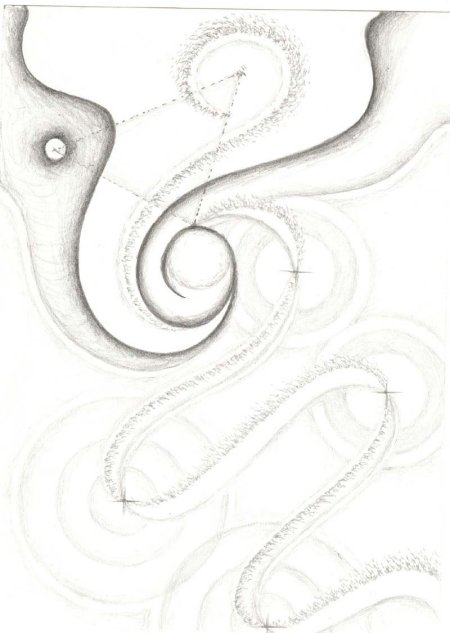
Above, you can see an energopsychogram that represents a Reiki First Degree attunement.

To meditate on the energopsychogram, just sit calmly with the image in front of you. Stare at the image. let it wash over you, defocus your eyes.

Notice the quality of the energy that is being elicited within you. What is the nature of the energy? Where do you feel it? How does it feel. Bathe in the energy of the image.

Second Degree energopsychogram

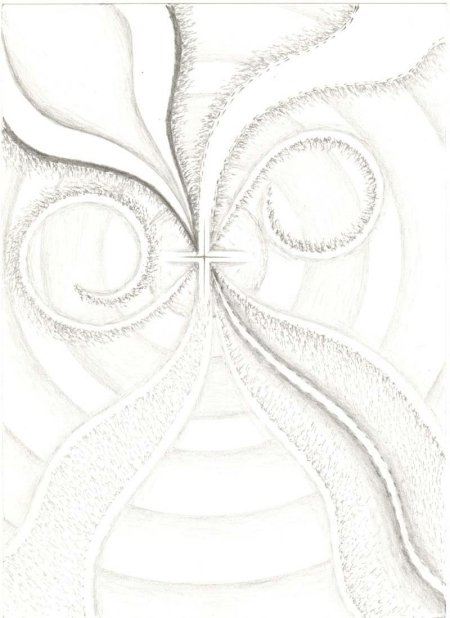
Here you can see the energopsychogram that represents a Reiki Second Degree attunement.

energopsychogram r2 reiki second degree attunement

Master attunement energopsychogram

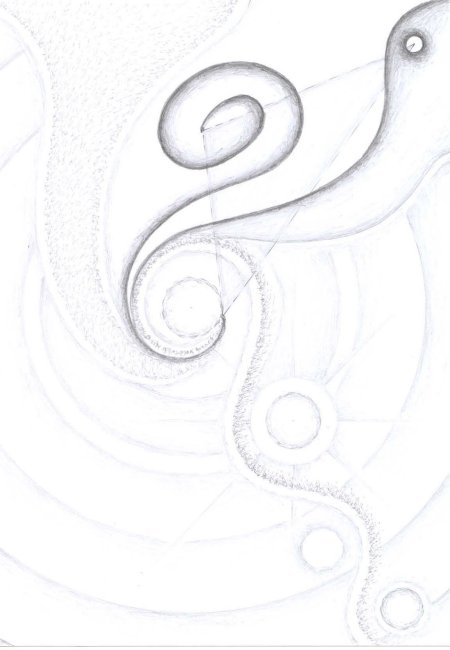
And finally, here is the energopsychogram that represents a Western Reiki Master attunement.

energopsychogram r3 reiki master attunement

Over to you

Time to experiment, then!

Meditate on the energies of the three energopsychograms.

What do you notice?

Post your experiences below so we can all see how things went.


Author:


Energopsychograms for the Reiki kotodama

energopsychogram focus kotodama

So this is my fourth post on the subject of  energopsychograms, which started with What are energopsychograms.

I have talked about these special images and how they can be meditated upon to elicit a particular energy, just like meditating on a symbol or a sound can frame the energy in a particular way, or produce a particular Reiki frequency that you can experience in a distinctive way.

I have shared the images that represent the energies of CKR and SHK, and the state elicited when you use HSZSN.

In this post I wanted to share images that represent the sounds of the Reiki kotodama, Shinto mantras that pre-date the use of symbols within Reiki and which elicit earth ki, heavenly ki and a state of oneness. The names of the kotodama are: focus, harmony and connection.

Above, you can see an energopsychogram that represents the energy of the focus kotodama, which elicits the energy of earth ki,

To meditate on the energopsychogram, just sit calmly with the image in front of you. Stare at the image. let it wash over you, defocus your eyes.

Notice the quality of the energy that is being elicited within you. What is the nature of the energy? Where do you feel it? How does it feel. Bathe in the energy of the image.

Harmony energopsychogram

Here is the energopsychogram for the harmony kotodama, which elicits the energy of heavenly ki.

energopsychogram harmony kotodama

Connection energopsychogram

And here is the energypsychogram that represents the state of oneness that is elicited by using the ‘connection’ kotodama.

energopsychogram connection kotodama

Over to you

Time to experiment, then!

Meditate on the energies of the three energopsychograms and conpare what you experience with the energies/state that you experience when using the corresponding Reiki kotodama.

If you don’t know the kotodama then compare the energies of these energopsychograms with the energies elicited when you meditate on the symbols: CKR, SHK and HSZSN.

What do you notice?

How does what you experience differ from the kotodama or the symbols, if at all?

Post your experiences below so we can all see how things went.


Author:


Energopsychogram for HSZSN (Distant healing)

energopsychogram hszsn hon sha ze sho nen honshazeshonen

So this is my third post in a series, which started with What are energopsychograms?

I have talked about these special images and how they can be meditated upon to elicit a particular energy, just like meditating on a symbol or a sound can frame the energy in a particular way, or produce a particular Reiki frequency that you can experience in a distinctive way.

Energopsychogram meditations

To meditate on an energopsychogram, just sit calmly with the image in front of you. Stare at the image. let it wash over you, defocus your eyes.

Notice the quality of the energy that is being elicited within you. What is the nature of the energy? Where do you feel it? How does it feel. Bathe in the energy fo the image.

HSZSN energopsychogram

The image that you can find at the head of this page represents that which is elicited by HSZSN, often referred to as the distant healing symbol. The symbol does not so much produce a particular energy (like the earth ki and heavenly ki that are elicited by CKR or SHK) but introduces a state of oneness, a merging or disappearing that helps us to focus and send distant Reiki.

Why not carry out a distant healing session by starting with a meditation on the image above. Bathe in its essence for a while and then send Reiki to your intended recipient(s).

Over to you

What do you notice when you use the HSZSN energopsychogram?

How does it differ from distant healing mediated via the corresponding symbol, or the connection kotodama, if at all?

Post your experiences below so we can all see how things went..


Author:

Energopsychogram for Heavenly ki

energopsychogram shk seiheki sei he ki

In my earlier post, What are energopsychograms, I talked about these special images and how they can be meditated upon to elicit a particular energy, just like meditating on a symbol or a sound can frame the energy in a particular way, or produce a particular Reiki frequency that you can experience in a distinctive way.

Energopsychogram meditations

To meditate on an energopsychogram, just sit calmly with the image in front of you. Stare at the image. let it wash over you, defocus your eyes.

Notice the quality of the energy that is being elicited within you. What is the nature of the energy? Where do you feel it? How does it feel. Bathe in the energy fo the image.

SHK energopsychogram

The image that you can find at the head of this page represents the energy of SHK, which is the energy of heavenly ki.

Why not compare its energy to that of SHK, the symbol. Click to find out how to : Meditate on the energy of a Reiki symbol.

Over to you

What do you notice when you meditate on the energy of the SHK energopsychogram?

How does it differ from the energy of he corresponding symbol, or of the harmony kotodama, if at all?

Post your experiences below so we can all see how the energy manifested itself.


Author: