All posts by taggart@reiki-evolution.co.uk

How to start a Reiki treatment

how to start a reiki treatment advice

A simple ritual to get your Reiki treatment started

People in different lineages are taught different ways of starting off a Reiki treatment – the ritual(s) that you carry out to get things started – and I thought it would be useful to share with you the sequence that we teach on Reiki Evolution courses, so that you can compare it with what you were taught.

It might trigger off some ideas and help you to develop your own way of doing things if you wanted to.

When standing by the recipient, our students are taught to go through a sequence represented by the letters A, C, B, M, F.

A = Affirm
C = Connect
B = Build
M = Merge
F = Flow

Below I describe these stages in a bit more detail…

Affirm

It’s quite common, I think, for Reiki people to make some sort of affirmation or dedication before starting a Reiki treatment, and we have students silently affirm, “I dedicate this treatment to the highest good of [client’s name]”.

It’s just a nice way of reminding yourself that when you carry out a Reiki treatment, you do so in a ‘neutral’ way, with no expectation of a particular result, metaphorically standing aside to allow the energy to be drawn by the recipient to where it needs to go. So you’re setting the right intent.

Once you have gone through this process again and again with different clients, you probably don’t need to keep on reminding and re-reminding yourself at the start of each session: you know what your intent is.

Connect

Here is where we focus our attention on our ‘connection’ to the energy, and we have our students imagine that energy is flowing down through their crown, down through the centre of the body to the Tanden.

And just focusing on that for a little while can bring a lovely meditative state, ideal for carrying out a Reiki treatment on someone.

Build

Now we direct our attention towards the Tanden, that energy centre two finger-breadths below your tummy button and 1/3rd of the way into your body.

This is the centre of your personal universe, the location of your intuition and creativity, a part of the body that is focused on in many traditional practices, for example martial arts, flower arranging, even the tea ceremony.

Here we notice that the energy starts to build here, strengthening and intensifying.

Merge

Having focused on our ‘connection’ to the energy and the building up of Reiki within us, now we move our attention to the recipient on the treatment table before us, imagining that we are merging with them, becoming one with them, experiencing a state of oneness.

We are neutral, empty, with no expectations, a necessary bystander in the process that is to follow.

Flow

And finally, we allow the energy to flow, drawn by the recipient to the most appropriate places for them on that occasion.

We have established ourselves as a clear channel, a free-flowing conduit, stepping aside metaphorically to allow the energy to be drawn by the recipient, creating a ‘healing space’ that they can use for their highest good.

We follow the flow of energy, resting our hands in the areas that are drawing the most energy, staying there for as long as the energy needs to flow there, resting our hands in just the right places for that person on that occasion.

Though intuitive working is something that we focus on mainly on our Second Degree courses, some of our First Degree students find that they are already feeling guided by the energy and we encourage them to go with the flow, ‘getting out of the way’ – not worrying or trying to puzzle out why you are being drawn to a particular area, just letting it happen.

Nice and simple

So there is a simple sequence that you can follow.

I really like the way that it flows from a simple affirmation, noticing your connection to the energy and building the energy within you, moving your attention towards the recipient, merging with them and allowing the energy to flow.

It’s like a lovely meditative dance with the energy.

Over to you

If this sequence differs from what you are doing currently, why not try it and see how you get on with it. And post a message below to let me know how it went.

Maybe there is something that you could incorporate into your own ritual, whatever that might be.

None of these things are set in stone, of course, and you can find your own distinctive way, so I hope the above has been helpful to you.

Here’s lots of advice about giving treatments

reiki books first degree manualIf you’d like some guidance about giving Reiki treatments, I have a whole load of advice and suggestions for you in the Reiki Evolution First Degree course manual.

This isn’t just available to Reiki Evolution students: anyone can work with our manuals.

You can order a professionally-printed copy, or you can download your manual right now.

Here are the links that you need:

Reiki First Degree manual

Reiki First Degree eBook


Author:

The “21-Day thing”

reiki 21 days twenty one

Where did the 21 day thing come from?

I wanted to talk a little bit about the “21 day thing”: the 21-day self-treat or the 21-day clear-out after attending a First Degree course.

I’m a bit puzzled by this and I’ve been trying to fathom where it came from, and why it should be recommended.

I think this idea probably came into being because it echoes the story told about Mikao Usui’s discovery of Reiki on Mt Kurama where, according to the story that Mrs Takata passed on, Usui Sensei went up Mt Kurama and fasted and meditated for 21 days, culminating in him being hit by a bolt of light, seeing symbols, and Reiki was born.

We know now that this isn’t actually what happened: Usui didn’t fast for 21 days up the mountain, though he did carry out something called the “Lotus Repentance meditation”, and this did last for 21 days I believe.

But this was quite a formalised process – an established Tendai practice – and he went home at night after each day’s meditation. In any case, this did not lead to the ‘eureka’ moment that Mrs Takata spoke about since Usui was already teaching his system before he carried out the first of his Lotus Repentance meditations, and he performed these meditations several times during his lifetime.

7 x 3 = 21

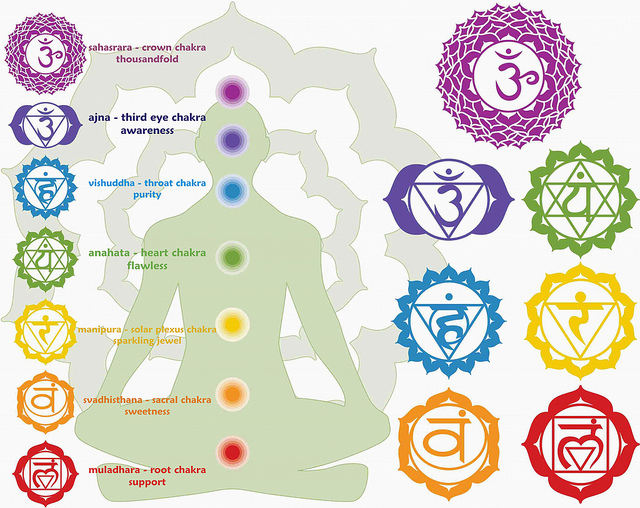
People have speculated and taught that the 21 consecutive days of self-treating is required because the energy makes a visit to each of a person’s chakras three times during this period.

The emphasis on chakras within Reiki seems to have originated within Reiki’s journey through the New Age movement, where some lineages have incorporated various New Age practices like crystals, spirit guides and Angels etc. Chakra work wasn’t part of the original system.

And this three-times-through-your-chakras seems to me to be a bit of ‘reverse engineering’, where you have something that you’re supposed to do, and then you back-track to try and find a justification for it, to make sense of it in your head.

Some suggest that if you carry out a practice for 21 days then you will have established it as a habit, and there may be something in that, actually.

Don’t stop after 21 days!

The problem that I have with this idea of a 21-day practice is that some people “do their 21 days” and then stop, or have only a sporadic practice afterwards, as if once you’ve done your 21 days… that’s it, you’ve cleared yourself out and you don’t need to work on yourself so dedicatedly afterwards.

And I also have a problem with the idea that you have a clear-out just during that 21 day period and then you’re sorted.

In my experience, the way that people react to Reiki in terms of ‘clearing out’, whether that be in terms of physical reactions or states of mind or emotions, seems to vary greatly from one person to another. And while Reiki doesn’t seem to give people an experience that they can’t handle, some can make a great big fast clear-out initially, some have it happening in dribs and drabs, while for others the process may be delayed for a while.

Everyone’s different. And there’s always something more to clear out!

We all live lives, we have stress, we suppress emotions, we fail to deal with things, so if we carry on working with Reiki, there will be stuff that we will need to shift in the future to bring things into balance for us, not just in those first few weeks.

And just wait until you start attuning people: you may have a mega-clear-out waiting for you!

So while I don’t object to people working on themselves dedicatedly for three weeks – why would I? – I’d rather emphasise that if you’re going to gain the greatest benefit out of your connection to Reiki then you need to work on yourself regularly.

You don’t have to self-treat (or carry out Hatsurei ho) every single day (and then beat yourself up for not being perfect if you have to miss a day sometimes) but if you can make Reiki a regular part of your life then you will reap the rewards.

And that’s not just for 21 days: that’s for life.

Over to you

So, do you have a regular practice of using Reiki on yourself?

And, if so, what have you noticed in terms of the way that your mind/body has responded to that ongoing energy work?

Did you have a bit of a clear-out to begin with, or a great big clear-out, and then occasional ups and downs after then?

Need a hand with your Reiki habit?

If anyone does want to carry out some task or practice for 21 days in a row, here is a free online service that will keep track of what you have been doing, sending you an e-mail every day to see what you have done. It’s called Habit Forge.

Did you like this blog?

If so, you are going to love this book…


“Whether you are at Level 1, 2 or Reiki Master Teacher Level (regardless of the Reiki flavour you are trained in), this book is very much for you! Within hours of starting to read this book, it has rejuvenated and enriched my own practices with a wealth of information and useful examples too.

The more you read the more you’ll have those wonderful ‘aha’ moments. I know I am already benefiting personally from the knowledge I’ve gained, but so will all my family, friends and clients too. Thank you Taggart for creating this incredible, uniting, enlightening book.”

Heidi Gaffney-Evans

Liberate Your Reiki!

86 Articles About Reiki: One Inspiring Vision

In this Reiki book you will find 80+ articles about Reiki, written by Reiki Master Teacher Taggart King. You will discover how to set your Reiki free, free from the constraints, dogma, rules and regulations of Western-style Reiki courses. Get back to Reiki’s original Japanese method and embrace simplicity, flexibility, creativity and intuition.

This book is suitable for people at all Reiki levels: beginners, those who are developing their Reiki, and Reiki Masters/Master Teachers. You will find advice about self-treatment meditations, energy exercises to build your ability as a channel, you will discover how to work with your intuition and embrace the power of intent.

Explore different distant healing methods and discover the beauty of Reiki’s original Japanese form. Learn how to use creativity and visualisation to enhance your self-treatments and treatment of others, and ditch all the silly rules and regulations that stifle the practice of Western Reiki in many lineages.

Finally, read Taggart King’s “10 Rules of Reiki”, the essential principles for a powerful and fulfilling Reiki practice.

This professionally-printed Reiki manual has 370 A5 pages, a glossy soft cover and we will send it to anywhere in the world!

Read the contents list before you order, if you like, by clicking on this link: Table of contents

Book: 370 pages.

Price: £15.99 + p&p


Or Download a PDF version now for only £12.49


Author:
Picture Credit: Martin Fisch


Video: Reiki Precepts in Japanese

Hi,

One of my team of Reiki Teachers, Kay Gillard, recently put together this short video sequence to teach the Reiki precepts in Japanese. Kay said:

“I love to chant the Reiki precepts in Japanese when I am sitting in gassho – Usui would like us to do this every morning and evening as part of our practice… do gassho every morning and evening, keep in your mind and recite… Continue reading Video: Reiki Precepts in Japanese

Be like water

reiki simplicity bruce lee

“Be formless, shapeless… like water”
“True refinement seeks simplicity”


…if you are wondering who said these things, you might be surprised to hear that they were spoken by Bruce Lee, film star and famous martial artist who developed Jeet Kune Do, a hybrid martial arts method that took the best approaches from different fighting systems and synthesised them into a flexible and effective fighting art. Jeet Kune Do is referred to as a “style without style” where, unlike more traditional martial arts which Lee saw as rigid and formalistic, JKD is not fixed or patterned: it is more of a philosophy with guiding thoughts, a “style of no style”. Bruce Lee often referred to JKD as “The art of expressing the human body” in his writings and in interviews.

And those comments got me wondering about Reiki, especially when Lee identified three different stages that someone’s practice could go through. He said that before training, people had a natural ability, something that was unformed and unfocused; training begins and the student learns how to follow the instruction, they are restricted to the framework that they are taught and many practitioners might not move beyond that stage, following the system almost by rote. The third stage is where the practitioner moves beyond the rote learning to embrace simplicity and flexibility.

So how does that echo one’s development with Reiki? Well before some people learn Reiki, they already have a healing ability, maybe unstructured or unconscious, unfocused, but a natural healing ability nevertheless. We have taught many such people, who have found that Reiki gives them a framework or a structure to work through, focusing and channelling and enhancing what they already had.

The student learns a particular approach, with some rules and standard hand positions and in some lineages quite a long list of things you can and can’t, should and shouldn’t, do with Reiki. Some practitioners remain at this stage, following the instructions they were given and remaining content with that way of working.

But you can move beyond that framework, simplifying your practice, altering what you do to the needs of the recipient. You can embrace intuitive working, where you leave behind those basic rules to go ‘freestyle’ and, where Lee describes his system as “The art of expressing the human body”, we could see intuitive working as “The art of expressing the energy”. Here we are empty and formless, flowing like water to where the water wants to go, joining with the energy and following it, directing the energy to where it wants to be directed, emphasising aspects of the energy that need to be emphasised. We stand as a flexible conduit between the source and the recipient, empty, formless, fluid.

I believe that clutter-free Reiki is the best Reiki, and that by cutting away the rules and the dogma we can ‘refine’ (to use Lee’s word) our Reiki practice. Emptiness is the goal here: no planning, no thought about what you might do, just being there with the energy and the recipient; your treatment has no form, no structure and you simply follow the flow of energy, becoming the energy, merging with the recipient, with no expectations other than to just ‘be’.


Picture credit: IQRemix


If you like the sound of this approach then you might consider doing some training with Reiki Evolution. We have live Reiki courses running throughout the UK and Taggart teaches one-to-one through his special Reiki Home Study courses. For more information, click on the links below:

Live Reiki courses
Home Study courses

Podcast: Release anger and worry

In all Reiki lineages, the first three precepts are shown as, “Just for today, do not anger, do not worry”, and they are a really important part of Reiki practice. Learning to fully embody these simple Reiki principles has the potential to really transform people’s lives and it’s very much a work-in-progress where, by reminding ourselves of these Reiki principles regularly, we gradually mould our behaviour and experience the personal benefits that come through engaging fully with the moment, experiencing humility, compassion and forgiveness.
Continue reading Podcast: Release anger and worry

My Manifesto for Reiki Tolerance

reiki evolution rainbow tree


Honouring all the flavours of Reiki

The lovely thing about Reiki is that there are so many styles, so many different ways of working with the energy. Various people on the Internet have tried to compile lists of the different versions, and I think the total runs to a hundred or more.

Reiki seems to work as an effortless ‘carrier’, rather like a radio station and transmitter that you can play endless different songs through, but you need the underlying radio waves before the songs can be played.

Reiki is like those radio waves: a carrier that supports very many different ways of working.

What Reiki song do you sing?

Is it Karuna Reiki or Seichem, is it Reiki Tummo or Celtic Reiki or ‘Traditional Usui’ (in all its sub-flavours), is your song Jikiden or Raku Kei?

Or maybe it’s Rainbow Reiki or Lightarian Reiki, Violet Flame or Usui-do.

Some systems use a few different symbols, some use *loads* of symbols, some are structured, others are more ‘content free’; Reiki accommodates them all.

And it is true that some people will be attracted to a particular approach over another because everyone is different and one approach may feel more ‘right’ to one person than another.

I like to get back to the historical roots of things

To my eternal shame, I suppose, I am into folk music [there, I have said it: I like folk music!]. I play the five-string banjo.

But rather than playing Bluegrass music, which came into being in the 1950s, I prefer to play ‘clawhammer’ style banjo, which takes you back to the very beginnings of ‘Old Time’ music when the syncopated ‘slave style’ of playing blended with immigrants’ Irish and English tunes.

It feels right to me to play in a way that is authentic and ‘original’, so far as it is possible to recreate that style.

I also dabble with the ‘Anglo’ concertina and my preference is to get back to playing the ‘original’ English Anglo concertina style, so far as it is possible to glean what that was.

So it’s not surprising, then, that when I became involved in Reiki I was attracted to what was known about the form of Reiki that Usui Sensei was teaching in the 1920s in Japan, rather than the later styles that had developed and changed and mutated after the time of Mrs Takata.

Discovering Original Japanese Reiki

I was lucky enough to have been in the right place at the right time, and received a lot of guidance from people who brought me a lot closer to understanding what the original system was all about, and my “Reiki Evolution” courses are based on that principle: to practise Reiki, so far as it is possible or practical, in a way that comes close to what we know that Usui was teaching to most of his students.

And for me that’s the bee’s knees, a wonderful way to practise that, *for me*, is much more fulfilling than the more standard ‘Western-style’ Reiki that I was first taught.

And we have taught many other Reiki people from a standard Western background who have found that the original system that we teach has many advantages.

There is no ‘one true way’

But not everyone is attracted to that way of practising Reiki because everyone is different, of course, and what I want to make clear is that I do not believe that what I teach is the ‘one true way’, the Reiki that everyone should learn, better than everyone else’s.

How arrogant and blinkered that would be, if I was to say such a thing.

I meet many lovely and open Reiki practitioners and teachers, who are happy and content to be practising Reiki in their unique way, and to accept that others can practise Reiki in their different way, and that’s it’s ok to differ. These are the Reiki people that I want to spend my time with: those who are open and content with the path that they are following, and who do not feel the need to look down their nose and impose their flavour and their rules on everyone else.

The curse of blinkered dogma

Sadly, there are some Reiki teachers out there who do actually believe that their way of teaching Reiki is the ‘correct’ way, that there is a ‘correct’ way to use the symbols, for example, and that if someone has been taught in a different way then they’re wrong.

This is sad.

This is divisive.

There are even people who believe that an attunement needs to be carried out in a certain prescribed fashion in order to be ‘correct’, yet the attunements that Mrs Takata taught have evolved and changed endlessly in different lineages; some are almost unrecogniseable.

And do you know what? They all work fine.

So I think we should be wary of Reiki Masters, no matter how prominent they appear to be, who tell you that what you are doing is wrong or that you shouldn’t do a particular thing: we are all on our journey with the energy, and our journey is our journey, leading us to practise in *our* way, not better, not worse, just different.

My belief

I believe that we should celebrate these differences, and be happy that there is infinite variety.

I believe that Reiki people should be free to find their own comfortable path with the energy, working in the way that suits them, rather than having to kow tow to the dogma and blinkered beliefs of another.

Over to you

So there you have it: my ‘manifesto’ for tolerance, acceptance, and mutual respect within Reiki.

I hope you agree with me.


And if you do, why not post a message below. 🙂


Save