All posts by taggart@reiki-evolution.co.uk

Focus on: Reiki symbols


reiki symbols in treatments use


Here is another instalment in a new series of blogs that I have put together, where I will be focusing on a particular area of Reiki practice or teaching and detailing any useful blog posts that I have written, and any useful resources I have to help you.

Today we focus on working with the Reiki symbols, and other symbols, and the resources that we have to help you with this.


Useful blogs

The basics

A simple way with symbols

https://www.reiki-evolution.co.uk/a-simple-way-with-symbols/

Were you taught the correct ‘Power’ symbol?

https://www.reiki-evolution.co.uk/variations-on-ckr/

Do I always have to use the Reiki symbols?

https://www.reiki-evolution.co.uk/do-i-always-have-to-use-the-reiki-symbols/

How can Reiki symbols unlock such power?

https://www.reiki-evolution.co.uk/how-can-reiki-symbols-unlock-such-power/


Additional help

How to use symbols if you don’t visualise well

https://www.reiki-evolution.co.uk/how-to-use-symbols-if-you-cant-visualise-well/

The breath of earth and heaven

https://www.reiki-evolution.co.uk/the-breath-of-earth-and-heaven/


New ideas about symbols

Some heresy about Reiki symbols

https://www.reiki-evolution.co.uk/some-heresy-about-reiki-symbols/

Let’s explore some non-Reiki symbols

https://www.reiki-evolution.co.uk/explore-some-non-reiki-symbols/

Create your own bespoke Reiki symbols

https://www.reiki-evolution.co.uk/create-your-own-bespoke-reiki-symbols/

Create a bespoke Reiki symbol for your client

https://www.reiki-evolution.co.uk/create-a-bespoke-symbol-for-your-client/


Resources to help you…


Reiki Second Degree Manual and eManual describe how to use the 3 Reiki symbols

The Reiki Meditations audio CD or MP3 tracks include a special Reiki symbol meditation


“Your Reiki Workout” Book and eBook contain ‘bespoke’ symbol exercises and a lot more


Picture Credit: Ashley Van Haeften


Focus on: Simplicity

feng shui your reiki healing

Here is another instalment in a new series of blogs that I have put together, where I will be focusing on a particular area of Reiki practice or teaching and detailing any useful blog posts that I have written, and any useful resources I have to help you.

I’m not always going to focus on practical things, like how to do a self-treatment or how run a Reiki share; sometimes I will talk about particular ideas or concepts that I think are helpful to dwell on when you practise Reiki.

So today we focus on the concept of simplicity and how that can affect and improve your Reiki practice.

Useful blogs

Diet, Health and Reiki

https://www.reiki-evolution.co.uk/diet-health-and-reiki/

Declutter your treatment rituals

https://www.reiki-evolution.co.uk/declutter-your-reiki-treatment-rituals/

Feng Shui your Reiki

https://www.reiki-evolution.co.uk/feng-shui-your-reiki/

The Kaizen of Reiki

https://www.reiki-evolution.co.uk/the-kaizen-of-reiki/

Be like water!

https://www.reiki-evolution.co.uk/be-like-water-bruce-lee-reiki/

Picture credit: Jordi Marsol

Focus on: Developing Reiki intuition

reiki intent

Here is another instalment in a new series of blogs that I have put together, where I will be focusing on a particular area of Reiki practice or teaching and detailing any useful blog posts that I have written, and any useful resources I have to help you.

Today we focus on developing your Reiki intuition and the resources that we have to help you with this.


Useful blogs

You can be more intuitive with your Reiki

https://www.reiki-evolution.co.uk/you-can-become-more-intuitive-reiki/

Develop your Reiki intuition (part i)

https://www.reiki-evolution.co.uk/develop-your-reiki-intuition-part-i/

Develop your Reiki intuition (part ii)

https://www.reiki-evolution.co.uk/develop-your-reiki-intuition-part-ii/

Develop your Reiki intuition (part iii)

https://www.reiki-evolution.co.uk/develop-your-reiki-intuition-part-iii/

Develop your Reiki intuition (part iv)

https://www.reiki-evolution.co.uk/develop-your-reiki-intuition-part-iv/


Resources to help you…


Special “Nentatsu ho” meditations to develop intuition, sensitivity and mindfulness

“Your Reiki Workout” Book and eBook contain many helpful intuition exercises


Picture credit: Parker Knight


Focus on: Treating other people

Here is another instalment in a new series of blogs that I have put together, where I will be focusing on a particular area of Reiki practice or teaching and detailing any useful blog posts that I have written, and any useful resources I have to help you.

Today we focus on treatmenting other people and the resources that we have to help you with this.


Useful blogs

 The basics

How to start a Reiki treatment

https://www.reiki-evolution.co.uk/how-to-start-a-reiki-treatment/

What if I get it wrong?

https://www.reiki-evolution.co.uk/what-if-i-get-it-wrong/

Reiki sensations when you treat someone

https://www.reiki-evolution.co.uk/reiki-sensations/

Get out of the way!

https://www.reiki-evolution.co.uk/get-out-of-the-way/


Treatment hand positions

What had positions should I use?

https://www.reiki-evolution.co.uk/what-reiki-hand-positions-should-i-use/

How long should I spend in each hand position?

https://www.reiki-evolution.co.uk/how-long-should-i-spend-in-each-reiki-hand-position/

Do I need to keep one hand on the body at all times?

https://www.reiki-evolution.co.uk/when-i-reiki-treat-keep-one-hand-touching-the-body/

Do I have to treat both sides?

https://www.reiki-evolution.co.uk/treating-both-sides-is-this-necessary/


Some things to think about

I can’t feel anything happening

https://www.reiki-evolution.co.uk/i-cant-feel-anything-happening/

When nobody feels anything

https://www.reiki-evolution.co.uk/when-nobody-feels-anything/

Experiencing disturbing things

https://www.reiki-evolution.co.uk/experiencing-disturbing-things/

What does it all mean?

https://www.reiki-evolution.co.uk/what-does-it-all-mean/

Talking to clients about strong reactions

https://www.reiki-evolution.co.uk/talking-to-clients-about-strong-reactions/

Reiki is not all fluffy bunnies!

https://www.reiki-evolution.co.uk/reiki-is-not-all-fluffy-bunnies/

Silly ideas in Reiki

https://www.reiki-evolution.co.uk/attunements-empowerments-contact-lenses/

Reiki treatments and winning the lottery

https://www.reiki-evolution.co.uk/reiki-treatments-winning-the-lottery/


Resources to help you…


“Talking you through a Reiki treatment” audio CD or MP3 tracks

Music for Reiki treatments on MP3


Reiki First Degree Manual or eManual with detailed info about giving treatments

Reiki Second Degree Manual or eManual with detailed info about giving treatments

Reiki First and Second Degree audio CDs or MP3 tracks complement the manuals perfectly


Special “Nentatsu ho” meditations to develop intuition, sensitivity and mindfulness

Focus on: Reiki self-treatments

reiki 1 training course first degree classes

Here is another instalment in a new series of blogs that I have put together, where I will be focusing on a particular area of Reiki practice or teaching and detailing any useful blog posts that I have written, and any useful resources I have to help you.

Today we focus on Reiki self-treatments and the resources that we have to help you with this.


Useful blogs

The basics

Simple energy exercises to get the energy flowing

https://www.reiki-evolution.co.uk/simple-reiki-energy-exercises-get-the-energy-flowing/

Self-treating for 21 days

https://www.reiki-evolution.co.uk/reiki-self-treat-for-21-days-thing/

Reiki for anxiety

https://www.reiki-evolution.co.uk/reiki-for-anxiety/

Reiki for stress

https://www.reiki-evolution.co.uk/reiki-for-stress/


How to self-treat

How to do a self-treatment (part i)

https://www.reiki-evolution.co.uk/how-to-do-a-reiki-self-treatment-part-i/

How to do a self-treatment (part ii)

https://www.reiki-evolution.co.uk/how-to-do-a-reiki-self-treatment-part-ii/

How to do a self-treatment (part iii)

https://www.reiki-evolution.co.uk/how-to-do-a-reiki-self-treatment-part-iii/

How to do a self-treatment (part iv)

https://www.reiki-evolution.co.uk/how-to-do-a-reiki-self-treatment-part-iv/

How to do a self-treatment (part v)

https://www.reiki-evolution.co.uk/how-to-do-a-reiki-self-treatment-part-v/


Taggart’s ‘releasing exercise’

Taggart’s 10-day Reiki challenge: the ‘releasing exercise’

https://www.reiki-evolution.co.uk/taggart-reiki-releasing-exercise/


Other things to think about

The issue of ‘grounding’ and Reiki?

https://www.reiki-evolution.co.uk/going-to-ground-with-reiki/

Which bits of me need treating?

https://www.reiki-evolution.co.uk/which-bits-of-me-need-treating/

Why don’t I feel so much when I self-treat?

https://www.reiki-evolution.co.uk/why-dont-i-feel-so-much-when-i-self-treat/

Can I do Hatsurei ho if I can’t visualise?

https://www.reiki-evolution.co.uk/can-i-do-hatsurei-if-i-cant-visualise/


The Reiki precepts

Overview of the Reiki precepts

https://www.reiki-evolution.co.uk/the-reiki-precepts/

Mindfulness and compassion

https://www.reiki-evolution.co.uk/mindfulness-and-compassion/

Something new: Taggart’s ‘precepts rehearsal’

https://www.reiki-evolution.co.uk/reiki-precepts-rehearsal-meditation/


Working with chakras

A Reiki chakra meditation for you

https://www.reiki-evolution.co.uk/podcast-reiki-chakra-meditation/


Resources to help you…


Reiki self-treatment meditations on MP3

“Reiki inner smile” meditation on MP3

First Degree Manual or eManual

Special “Nentatsu ho” meditations to develop intuition, sensitivity and mindfulness

Special “Nentatsu ho” meditations to fully embrace the Reiki precepts


Focus on: Supporting your students

giving support to reiki students

Here is another instalment in a new series of blogs that I have put together, where I will be focusing on a particular area of Reiki practice or teaching and detailing any useful blog posts that I have written, and any useful resources I have to help you.

Today we focus on teaching Reiki again, but this time focusing on ways in which you can support your students.

Useful blogs

The basics

Supporting students

https://www.reiki-evolution.co.uk/reiki-teaching-supporting-your-students/

“Doing your 21 days”

https://www.reiki-evolution.co.uk/reiki-self-treat-for-21-days-thing/


Reiki shares

How to run a Reiki share (part i)

https://www.reiki-evolution.co.uk/how-to-run-a-reiki-share-part-i/

How to run a Reiki share (part ii)

https://www.reiki-evolution.co.uk/how-to-run-a-reiki-share-part-ii/


Reiki practice days

How to run a Reiki Practice Day

https://www.reiki-evolution.co.uk/how-to-run-a-reiki-practice-day/


Distant empowerments

Receive distant Reiju empowerments every week

https://www.reiki-evolution.co.uk/tune-into-our-weekly-distant-empowerments/


Resources to help you…


“Liberate Your Reiki!” Book or eBook for your students

“Your Reiki Workout” Book or eBook for your students

Reiki manuals and CDs to give to your students, particularly:

            Reiki First Degree Manual or eManual

            Reiki Second Degree Manual or eManual

            Reiki meditations audio CD or MP3 tracks

            Talking you through a Reiki treatment audio CD or MP3 tracks

Special “Nentatsu ho” meditations to develop intuition, sensitivity and mindfulness


Photo credit: Anne Jacko


Focus on: Teaching Reiki (part ii)

reiki teaching advice: explain, guide, review

Here is another instalment in a new series of blogs that I have put together, where I will be focusing on a particular area of Reiki practice or teaching and detailing any useful blog posts that I have written, and any useful resources I have to help you.

Today we focus on teaching Reiki, again, just like last week, because I had more resources on this topic than would comfortably fit in just one post.


Useful blogs

About Reiki course materials

Your course materials

https://www.reiki-evolution.co.uk/reiki-teaching-your-course-materials/

How to create your Reiki manual

https://www.reiki-evolution.co.uk/reiki-teaching-how-to-create-your-reiki-manual/


Don’t worry about it

What if I get it wrong?

https://www.reiki-evolution.co.uk/what-if-i-get-it-wrong/

Reiki sensations when you attune/empower someone

https://www.reiki-evolution.co.uk/reiki-sensations/


About initiations

The nature of attunements/empowerments

https://www.reiki-evolution.co.uk/do-reiki-attunements-actually-work/

Let’s talk about Reiki initiations

https://www.reiki-evolution.co.uk/lets-talks-about-reiki-initiations/

The founder of Western Reiki did distant attunements!

https://www.reiki-evolution.co.uk/takata-distant-attunements/


Don’t do this

Advice about RMT training

https://www.reiki-evolution.co.uk/become-a-super-power-reiki-master-in-just-48-hours-really/

Don’t be one of these people!

https://www.reiki-evolution.co.uk/beware-of-know-it-all-reiki-people/


Resources to help you…


The “Teaching Reiki” book, which is a complete guide to setting up and running Reiki courses and supporting your students.


The Reiki First Degree manual, which you can give to your students

The Reiki Second Degree manual, which you can give to your students


The Reiki Master Teacher manual, detailing symbols, sacred sounds, intuitive working, the use of intent and detailed instructions about how to perform attunements and empowerments

Reiki Master Teacher audio CDs and DVD, a perfect accompaniment to the RMT manual


Gorgeous Japanese Reiki certificate templates that you can use to create beautiful Japanese-style Reiki certificates for your courses.

Reiki manuals and CDs to use on your courses, which you can order in bulk and receive big discounts.


Photo credit: Intel Free Press


Focus on: Teaching Reiki (part i)

reiki teaching goals

Here is the first in a new series of blogs that I will be posting, each one focusing on a particular area of Reiki practice or teaching and detailing any useful blog posts that I have written, and any useful resources I have to help you.

Today we focus on teaching Reiki.


Useful blogs

For new teachers

Advice for new Reiki teachers

https://www.reiki-evolution.co.uk/advice-for-new-reiki-teachers/


Planning your course

Structuring your course

https://www.reiki-evolution.co.uk/reiki-teaching-structuring-your-course/

What are your goals?

https://www.reiki-evolution.co.uk/reiki-teaching-what-are-your-goals/


The content of Reiki 1 and Reiki 2 courses

What Taggart thinks First Degree should be about

https://www.reiki-evolution.co.uk/back-to-basics-reiki-first-degree/

What Taggart thinks Second Degree should be about

https://www.reiki-evolution.co.uk/back-to-basics-reiki-second-degree/


Explaining things to students on your course

Explain, guide, review

https://www.reiki-evolution.co.uk/reiki-teaching-explain-guide-and-review/

Tell them, tell them, tell them

https://www.reiki-evolution.co.uk/reiki-teaching-tell-them-tell-them-tell-them/


Useful principles to follow when presenting your course

Using learning preferences

https://www.reiki-evolution.co.uk/reiki-teaching-using-learning-preferences/

Teaching using the right 4MAT

https://www.reiki-evolution.co.uk/reiki-teaching-using-the-right-4mat/


Resources to help you…


The “Teaching Reiki” book, which is a complete guide to setting up and running Reiki courses and supporting your students.


The Reiki First Degree manual, which you can give to your students

The Reiki Second Degree manual, which you can give to your students


The Reiki Master Teacher manual, detailing symbols, sacred sounds, intuitive working, the use of intent and detailed instructions about how to perform attunements and empowerments

Reiki Master Teacher audio CDs and DVD, a perfect accompaniment to the RMT manual


Gorgeous Japanese Reiki certificate templates that you can use to create beautiful Japanese-style Reiki certificates for your courses.

Reiki manuals and CDs to use on your courses, which you can order in bulk and receive big discounts.


Photo credit: Intel Free Press


Reiki, Spiritual Healing & Christian Prayer

reiki distant healing cupped hands method

Someone the other day asked me how to explain the difference between Reiki healing, Spiritual healing, and Christian prayer, and whether there was actually a difference between any of these things. So this is what I came up with.

Christian prayer

Christian prayer of course depends on a belief in the Christian God, and involves and individual making a request to that deity to intercede in some way in the life of another person, whether that be to eliminate a disease or symptoms or make some improvement in the life of the intended recipient. There will be no thought of an ‘energy’ providing the mechanism behind such changes, and the person offering up the prayer is essentially powerless in the situation, unable to influence the outcome beyond asking or pleading with the deity to intercede.

So there are important differences when compared to Reiki.

The practice of Reiki does not depend on a belief in any diety or pantheon and does not require any sort of religious or spiritual beliefs, so it should be acceptable to people of any, or no, religion. And because there are no Gods in Reiki, there is no-one there to ask for help in a particular situation. That’s not to say that some Reiki practitioners don’t bring their personal spiritual or religious beliefs into their practice, though, so it wouldn’t be unheard of for a Christian, say, to practise Reiki, or practise their Reiki healing, in the name of Jesus Christ, and some Reiki practitioners might call on the ‘Ascended Masters’ or Spirit Guides when treating or attuning someone, but that is their personal choice and is not something that is an essential, or necessary, part of the system.

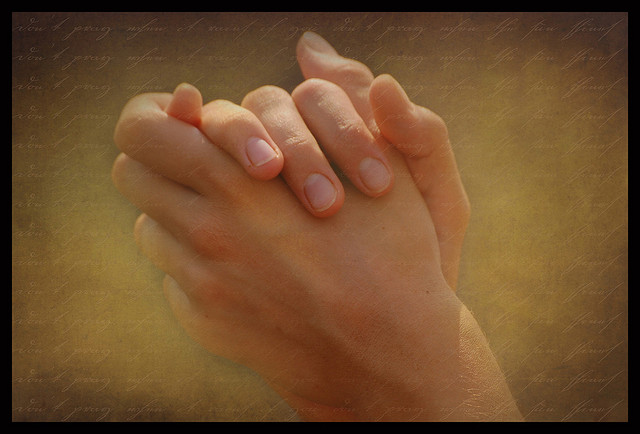
The Reiki practice that comes closest to Christian prayer would be distant healing, I suppose, where one sits quietly, perhaps clasping one’s hands together, enters a gentle meditative state, and allows the energy to flow to the recipient. We are neutral in the process, of course, not ‘pushing’ for a particular end result, just allowing the energy to do what it does, and we tend to have in mind that the healing is for the ‘highest good’ of the recipient.

But Reiki practiitoners do not necessarily frame that ‘highest good’ in terms of a deity that decides what is right for the recipient: we are merely framing the energy transmission in such a way that we are not pushing the recipient to receive a particular result, or even receive or benefit from the energy: we are ‘offering it up’ for the recipient to receive or not receive, as is appropriate. And as to who or what determines what is appropriate for the individual… that is left vague.

So the ways in which Reiki is not the same as Christian prayer boil down to our not requesting a particular end result (we stay neutral and offer up the energy when practising distant healing, certainly) and in not requiring the existence or intervention of some deity in the process.

Spiritual healing

To the casual onlooker, Reiki healing would appear to be much the same as Spiritual Healing, where energy is channelled from a higher source, through your hands, into the recipient. But there are some major differences, and that is what I want to describe here. Spiritual Healing and Reiki are not the same. In the end I see all forms of energy healing as working with the same sort of stuff, so the differences are in how you connect to the energy and what you do with it when you’re connected. I am in no way an expert on spiritual healing in all its forms, but from my point of view the differences between spiritual healing and Reiki are as follows:

  • Origins
  • Ways of connecting to the energy
  • Beliefs
  • Ways of treating
  • Self-treatments
  • The use of Symbols

Origins

Spiritual healing grew up through Victorian Spiritualist Churches, with their table-thumping séances, and has thus had a sort of Christian origin which has continued to a greater or a lesser degree. Reiki is Japanese and has more in common with Tai Chi, QiGong, Shiatsu and Acupuncture, Mystical Buddhism, Shintoism etc. Having said that, the NFSH (National Federation of Spiritual Healers) in the UK is non-denominational, but I see the *origins* of spiritual healing as being connected to Christianity, and spiritual healing is offered at some churches.

Ways of connecting to the energy

Spiritual healers learn through practice to connect to and draw down the energy. Reiki practitioners go through a ‘connection ritual’ that gives them a strong and consistent connection to the source right from day one, which I imagine seems to be a nonsense for spiritual healers, who have to work hard and long to do this.

Though some spiritual healers would see themselves as ‘attuning’ to the energy just before they treat someone, the word ‘attunement’ has a special meaning within Reiki, and does not refer to an individual’s ‘preparation to give a treatment’. ‘Attunement’ within Reiki is a special connection ritual that is carried out on a Reiki student when they attend a Reiki course.

Once ‘attuned’ on a Reiki course, the Reiki student is able to channel chi strongly from day 1. It seems to give a strong consistent connection to the source, according to spiritual healers to whom I have taught Reiki. Students can then carry out daily energy exercises (similar to QiGong exercises) to help make them a stronger channel for the energy.

Beliefs

Spiritual healers believe that they can be vulnerable to astral plane entities when they open themselves to the energy, so they take steps to protect themselves by visualising bubbles of light around them, and close themselves down – closing down their chakras – at the end of a treatment session. I have heard of some spiritual healers having someone on hand ‘to stand guard’ as they treat. Reiki people do not have such beliefs, they do not generally take those steps, and the energy seems to be inherently protective.

If you believe that you need to protect yourself then your underlying belief is that you are vulnerable, and that becomes your reality. It you believe that you are safe then you are too!

Protection is also seen as needed to prevent a practitioner from ‘picking up’ problems from the person they are working on. I have met people – particularly hands-on therapists (reflexology, aromatherapy etc.) – who have experienced this problem. Reiki however seems to prevent this from happening. I have taught many therapists who found that attunement to Reiki both prevented them from ‘picking up things’ from their clients, but also stopped them from feeling ‘drained’ at the end of a session. Reiki seems to have the ‘protection’ built in, without having to do anything to achieve this.

That’s not to say that some Reiki people aren’t taught to protect themselves, and visualise protective bubbles etc., but this is usually something that is passed on by Reiki teachers who started out in spiritual healing. They have brought their ‘spiritual healing’ beliefs with them, and applied those rules to the practice of Reiki.

Ways of treating

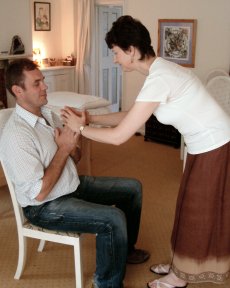
Spiritual healers tend to treat people seated in a chair, and work in the aura. Reiki people tend to treat people who are lying down on a treatment couch and tend to use a hands-on rather than a hands-off approach.

Self-treatments

There seems to be more of an emphasis on self-treating within Reiki, an essential part of the system. I don’t get the impression that this is the same with all spiritual healing.

The use of Symbols

In the way that Reiki is taught and practiced in the West, symbols are an integral part of the system, used both in the connection rituals (‘attunements’), and used when treating others. The symbols give the Reiki practitioner more conscious control of the energy they are working with, though ideally the symbols should be used intuitively rather than being imposed in a calculated academic fashion. Spiritual healing does not use symbols.


Now the above are generalisations, and I am sure that there are many, many spiritual healers out there who will disagree with what I have just said, but as I understand it, those are the main differences between spiritual healing and Reiki.

Did you like this blog?

If so, you are going to love this book…


Liberate Your Reiki!

“Whether you are at Level 1, 2 or Reiki Master Teacher Level (regardless of the Reiki flavour you are trained in), this book is very much for you! Within hours of starting to read this book, it has rejuvenated and enriched my own practices with a wealth of information and useful examples too.

The more you read the more you’ll have those wonderful ‘aha’ moments. I know I am already benefiting personally from the knowledge I’ve gained, but so will all my family, friends and clients too. Thank you Taggart for creating this incredible, uniting, enlightening book.”

Heidi Gaffney-Evans


Liberate Your Reiki!

86 Articles About Reiki: One Inspiring Vision

In this Reiki book you will find 80+ articles about Reiki, written by Reiki Master Teacher Taggart King. You will discover how to set your Reiki free, free from the constraints, dogma, rules and regulations of Western-style Reiki courses. Get back to Reiki’s original Japanese method and embrace simplicity, flexibility, creativity and intuition.

This book is suitable for people at all Reiki levels: beginners, those who are developing their Reiki, and Reiki Masters/Master Teachers. You will find advice about self-treatment meditations, energy exercises to build your ability as a channel, you will discover how to work with your intuition and embrace the power of intent.

Explore different distant healing methods and discover the beauty of Reiki’s original Japanese form. Learn how to use creativity and visualisation to enhance your self-treatments and treatment of others, and ditch all the silly rules and regulations that stifle the practice of Western Reiki in many lineages.

Finally, read Taggart King’s “10 Rules of Reiki”, the essential principles for a powerful and fulfilling Reiki practice.

This professionally-printed Reiki manual has 370 A5 pages, a glossy soft cover and we will send it to anywhere in the world!

Read the contents list before you order, if you like, by clicking on this link: Table of contents

Book: 370 pages.

Price: £15.99 + p&p


Or Download a PDF version now for only £12.49


Photo credit: Irina Gheorghita

Let’s Talk About Reiki Initiations

reiki attunements reiju empowerments initiations

Do we connect at all?

It all starts with a connection, doesn’t it? We “attune” to the energy, connecting them or hooking them up to a source of energy that they did not have access to before… or do we?

Are we connecting people to something external to them?

One of the important principles of the original system was the concept of ‘oneness’ and in fact one of the goals of the original system was to experience this state, by working with meditations and/or kotodama at Second Degree.

The idea here is that what we experience as reality is said to be ‘illusion’ : the notion that we are individuals, separate and distinct from other people, is an illusion, and ultimate reality is oneness. There is no me, there is no you. In fact one way that you could explain distant healing is by saying that there is no problem in ‘sending’ the energy to another person because there is no other person and there is no you!

And in that light, how could there be something external to us that we ‘connect’ to, how could there be something that we were not ‘at one’ with: we already have the connection.

So what does the attunement do?

Well we could see the ritual as a way of directing the student’s attention in a particular way, helping them to recognise or notice something that has always been there.

I like to explain this in these terms:

Imagine that you are visiting a friend and you walk into their lounge. They say to you, “can you hear that high-pitched noise?”. You can’t hear anything, well not to begin with, anyway.

Then you listen, you really listen, you focus your attention in a new way, in a different way from how you were paying attention when you first walked into the room… and suddenly you can hear the sound because you have ‘tuned in’ to it.

You have been ‘attuned’ to something that had already been there, and you were only attuned to that sound through the intervention of your friend, who asked you the right question.

And to take this metaphor a little further, does it matter exactly what wording your friend uses to direct your attention to the sound that you couldn’t initially hear?

No, of course not, there are many ways of asking someone to pay attention to a ‘mystery’ sound.

Your friend needed to be there in some way to facilitate the process, but the detail of what they said isn’t so important. Their intention in directing your attention in a particular way is what’s significant.

And in fact they didn’t even need to have been in the room: they could have called you on the telephone and asked the question, or they could have left you a note to read. The end result would have been the same: the intervention of a third party, in some way, helping you to ‘tune in’ to something that had already existed and which you had the potential to experience, but didn’t until your friend helped to point you in the right direction in terms of your awareness.

That is what attunements do.

Where did attunements come from, and which are the right ones?

It seems fairly clear that Usui Sensei did not attune anyone to anything: he did not use attunements. He empowered people using intent.

Attunements only came into being after Usui’s death when the Imperial Officers got together and created a ritual that gave them the same sort of experiences that they had noticed when being empowered by Usui.

They had only trained with Usui for a relatively short space of time and would not have reached the level where they would have been taught how to empower others, so they put together their own ritual.

And what was this ritual, exactly?

Well, it’s difficult to say. There is information about a ritual that Tatsumi was taught by Dr Hayashi, but there is some disagreement about exactly what the ritual was for.

Dr Hayashi will have taught attunements to Mrs Takata, and one assumes that she passed these on in an unmodified form to the teachers that she initiated but, as I understand it, even within “The Reiki Alliance” – an organisation greatly wedded to the Office of Grandmaster – the attunement rituals have been altered and modified in different lineages.

There is a notion that you have to have four attunements for First Degree for it to be ‘kosher’, though in some lineages they might carry out three, or two, or even one.

Different philisophies & systems creep into Reiki

Various principles from different energetic systems have been slotted into Reiki over the years, and symbols from non-Reiki sources, too.

So, for example, the attunements that Reiki Evolution use, which are slightly mutated ‘William Rand’ attunements, include the ‘Tibetan’ Master Symbol, and also the use of the HuiYin, the Fire Dragon and the Violet breath. We are taught three different First Degree attunements, but we do the third one twice to make that magic number four!

Not all Reiki teachers have the ‘Tibetan’ Master symbol, not all use the violet breath, not all connect the HuiYin, not all use the magic ‘four’ attunements approach, and the empowerments used by Usui’s surviving students did not involve using any of these things.

So I suggest that if we’re going to carry out attunements then we use the method that we were taught, and make sure that we are doing it ‘correctly’, while also remembering that the individual details of a particular attunement style are not so important.

You are there as a facilitator, someone who helps the student to recognise something that is already there within them, and this can be achieved in different ways.

Distant connections

There is controversy about the use of distant attunements and, currently, none of the Reiki associations will accept students that have received distant attunements, only ‘in person’ ones.

None of the societies have specified what is the maximum safe distance that a teacher has to be from the student in order for an attunement to qualify.

This aversion to distant attunements involves amazing mental gymnastics: on the one hand such people believe that Reiki can be sent from one side of the planet to another, to the future, to the past, just by thinking about it (or by using a symbol and thinking about it), passing through the planet, whizzing through time… and yet when it comes to ‘connection’ rituals the teacher has to stand right in front of the student otherwise it won’t work.

Of course a lot of online Reiki courses are rubbish, but that can also be said of many ‘in person’ Reiki courses, where students emerge with no clear idea of what Reiki is, nor how to use it for their own benefit or to treat others.

The individual stages of attunement methods

yorkshire reiki harrogate courses
An attunement ritual is an outer expression of an inner intention

We know that attunement rituals have mutated and altered as they have been passed on from teacher to teacher, and some of the changes will simply reflect that teacher’s particular style of working, where they have expressed their intention – or their understanding of what is going on when you ‘attune’ someone – in terms of a particular hand or arm movement, a particular affirmation or visualization.

The outer ritual expresses an inner intention, and an intention can be expressed in different ways by different people.

Of course, people have come to different conclusions about what they are doing and why, based on their belief systems and other practices that they are involved with, so teachers will have conflicting beliefs about what is a necessary part of an attunement, what needs to be carried out for an attunement to be effective.

There are many attunement styles, reflecting differing belief systems, and these conflicting attunements work.

They all work because they are all expressions of an intention, which underpins what you are doing when you ‘attune’.


Did you like this blog?

If so, you are going to love this book…


Teaching Reiki

“Spot on! I’ve been teaching reiki for many years and I must say I wish this book had landed back then!

I’ve put together courses and really would have loved a book like this to refer back to, it’s concise, clear, laid out really well and is informative and a mini support system to boot.

If you’re entering the Reiki world with an aim to become Master/Teacher then having this book in your armoury will benefit you.”
S J Price


Teaching Reiki

A Comprehensive Guide to Running Great Courses

This is the book I really wish had been available when I started running Reiki courses in 1997. And it would have helped me greatly in my journey as a Reiki teacher thereafter.

You’ll find a wealth of advice about how to set up and run your Reiki courses: read articles about planning and structuring your courses; find out how to explain things to students in a way that honours their learning preferences and personality types; discover how to create top quality course materials and how to support your students long-term.

We look at the differences between ‘Western’ and Original Japanese Reiki and I explain how I created “Reiki Evolution” courses, which pass on the essence of Reiki’s original form. Read this book and you’ll know how to teach “Reiki Evolution” style: what to say, what to teach, and even how to teach Reiki in a ten-week ‘Evening Class’ format.

This book will be of interest to anyone who is about to start teaching Reiki, or to established Reiki teachers who are interested in enhancing the quality of their courses.

Read the contents list before you order, if you like, by clicking on this link: Table of contents

Book: 370 pages.

Price: £15.99 + p&p


Or Download a PDF version now for only £12.49


The Five Elements & Reiki: Even More Correspondences!

five elements many correspondences mind map

I mentioned in my earlier post “An Introduction to Traditional Chinese Medicine” that I have created a Reiki healing system based on working with the “Five Elements” of Traditional Chinese medicine (TCM). In a series of articles I have been talking about different aspects of the Five Elements and how they impinge on people’s lives: how imbalances in the five elements can show themselves as physical conditions and particular emotions and states of mind.

I have written about how the elements support and control each other through the nourishment and control cycles, I’ve spoken about the meridians and body organs that relate to each element, and in my recent articles I have been talking in a lot more detail about the emotions of the elements and the states of mind of the elements.

In todays blog, which ends our series of blogs about the Five Elements, I will be talking you for a run through a big collection of other areas where the five elements impinge on our lives…

The many Correspondences of the Five Elements

Each Element has associated with it a sense organ, a body part, an orifice, a physical manifestation, and a variety of other aspects, for example a colour, a taste, and a time of day. An imbalance in an element can show itself as a characteristic symptom in one of these areas.

In the following paragraphs I am just going to touch on a few of these.

Wood

The Eyes are represented by Wood, so an eye problem could be associated with an imbalance in the Liver and Gall Bladder: blindness, short- or long-sightedness, astigmatism or any sort of distorted vision. These organs are associated with planning, judgement and decision-making, and you could say that it takes vision and sight to be able to make proper decisions.

Headaches at the crown, temples or behind the eyes are characteristic of Wood imbalance.

Since Wood governs cycles of growth, Wood imbalances can cause irregular or painful menstruation or premature birth, in growth disorders in childhood or puberty, and in cancer.

A healthy Wood element grows out in all directions, so imbalance may show itself in symptoms that only occur in one side of the body or in diseases where there is lack of co-ordination in the muscles, or glands or organs. Wood has an important role in co-ordinating the right and left hemispheres of the brain, and an imbalance can be expressed in psychiatric and neurological disorders, in Schizophrenia, and in some forms of epilepsy.

Finally, Wood is associated with the sound of Shouting, not surprising when you think of its connection with anger and aggression, so a person who always talks in a kind of shout, aggressive and forceful, is showing a Wood imbalance.

Fire

The Ears are represented by Fire, and so the Heart, the Small Intestine, The Heart Protector and the Triple Heater are all involved in hearing. The Small Intestine would be involved in sorting sounds, and so ringing in the ears and deafness could be related to a Fire imbalance. These are more organic things, but a Fire imbalance could also be seen in someone who has difficulty in listening to others. Interestingly, the four Fire meridians are found near the ears.

The Tongue is the sense organ of Fire, so a speech impediment may be related to an imbalance in Fire, and this has already been discussed in more detail earlier. Fire also governs the maintenance and regulation of the entire circulatory system, so arteries and veins are the ’tissue’ of Fire, and so are the Heart, Pericardium (the Western anatomical structure), the capillaries and all the hormones and regulatory mechanisms that are involved in the control of circulation. Thus an imbalance could be represented by hardening of the arteries, varicose veins, cold hands and thrombosis.

In ancient times the Pericardium was seen as an organ of Water, as a ‘Yang-Kidney’, and even now is seen as occupying a special central position between Kidney and Heart, between Water and Fire, between the upper and lower poles of a person. The significance of this is that in Chinese medicine it is seen as desirable to maintain a balance between left and right, above and below. In Western civilisation we have come to value the upper pole, to value Fires associations with love, speech and intellect. These are more treasured than the depths of Water, with its sexuality, meditation and sinking into the archaic levels of the soul. A balanced Pericardium forms a bridge between Water and Fire, allowing us to experience a fulfilled sexuality that brings forth joy and laughter. If the Pericardium is balanced, and chi can flow properly, then we feel a deep connection between sexual lust and love, and we are able to freely give and receive.

Though the Heart and Pericardium are both Yin organs, they are very different in their functions: the heart is responsible for inner matters like clarity of thought, speech, responsibility and motivation, whereas the Pericardium is responsible for blood circulation, heartbeat and heart rate on the physical level. Because of this, cold hands and feet are an indication of a lack of energy in the Pericardium, as is the person who has little warmth. Such people do not find much joy in sexuality, the stingy people who have a difficult time giving, people who need a long time to thaw, and closed people who do not laugh.

Earth

Earth is represented by Flesh – the connective tissue and fat tissue – and a wasting disease may be due to an Earth imbalance. The state of the flesh reflects the Earth element. Earth also represents muscle. Since Earth is also related to the Mouth, many mouth diseases can be related to an Earth imbalance and practitioners of TCM can assess the condition of the Stomach and Spleen by looking at the lips.

Since Ideas and Opinions are associated with Earth, then someone who is displaying extreme dogmatism, or who is unable to create ideas or conclude thoughts, may have an Earth imbalance.

The colour yellow is associated with Earth, so if a person seems to have a subtle yellow hue coming from their face then this is indicative of an Earth imbalance. It is beyond the scope of this course to teach Oriental Visual Diagnosis, and it is unnecessary for our purposes.

Metal

The Nose is associated with Metal, and so a limited or non-existent sense of smell can be associated with a Metal imbalance. The Chinese imagine an elemental spirit of Metal: an animal instinct that gives us the ability to ‘smell’ danger, to sense how other people are thinking and feeling about us, and to foresee future events. It is our sense of smell that allows us to differentiate between foods, people and surroundings that are good, or bad, for us. The connection with the Lungs is obvious and, interestingly, the Large Intestine Meridian is close to the nose.

A related correspondence is that of Mucus, and Metal governs the secretion of mucus by mucous membranes, and particularly in the breathing passages. So a dry throat, coughing etc. are associated with a Metal imbalance, as are a persistent nasal drip and blocked sinuses.

The themes of breathing, and the disposal of waste, are continued in Metal’s association with the Skin. We are in contact with our environment through our skin, symbolic of the way that Metal connects us to the Universe. The skin is said to reflect the condition of the lungs, and it is not uncommon in Western medicine to see skin problems like eczema (skin problem) associated with asthma (lung problem). Psoriasis and rashes would be connected, as would acne, boils and pimples, which are all related to the accumulation of and getting rid of waste products through the skin. In a wider sense, we show our attitudes towards other people by allowing them to touch us, or by avoiding contact with them. We are ‘in touch’ with nature only as long as we enjoy the sensation of the wind, the coolness of water, the warmth of the sun and the feeling of the earth and plants.

The time of day for Metal is 0300 hrs – 0700 hrs. If we were to get up with the dawn, then this would be the time when we would start the day with some deep breaths, and defecation would take place quite naturally during these ‘Metal’ hours. Energy cultivation techniques like Tai Chi would be done in local parks when the sun is rising, in the fresh air.

Water

The elemental spirit of Water is our will power, our will to survive, our sexual drive. It represents the vitality with which we master life. This spirit – called Zhen – can unfold when the organism is flowing freely, fresh and clean inside, and when the hormonal system is functioning effectively so the metabolism is finely tuned. In these circumstances power and vitality can develop. This power shows itself in supple body movements, flexible joints, sexual potency, strong bones and healthy teeth, a silky shine to the hair, good hearing, a tremendous urge for action and activity, and a healthy ability to adjust to the demands of circumstances.

Balance within Water depends on the relative strengths of the yin and yang Kidneys. When the yang energy is weak, or when the yin Kidney is relatively strong, then the will to live, vitality, and sexual drive decrease. The results may be a general weakness, impotence, frigidity and paralysing fear. When the yang Kidney is dominant then you may find a person who is constantly in a hurry, or a person who exhibits rigid behaviour and body movements. This rigidity shows itself mainly in the lower back, the sacro-iliac joints and the back of the legs (along the course of the Bladder meridian). Symptoms of this rigidity are such things as hollow back, disk problems in the lumbar area, sciatica, lumbago and bladder infections.

Other signs of a Water imbalance are kidney stones, kidney and urinary tract infections, bone diseases, loss of hair, some types of watery diarrhoea, menstrual disorders, insomnia, and constantly cold hands and feet.

In fact a lot of sexual functions depend on balance in Water: the health of reproduction and the workings of the testicles and ovaries for example.

The Ears are connected with Water, though we have already spoken about the effect of Fire, and the Small Intestine’s sorting functions, on hearing. Water is more related to the sense organ itself and the semicircular canals. For this reason vertigo, lack of balance and dizziness can represent a Water imbalance, as well as middle ear infections.

The time of day for Water is 1500 hrs – 1900 hrs. A person with a Water imbalance might feel that this time of day is their best, when they feel more alive than usual, but more likely it might be the time of day when the person feels at their lowest ebb. There may also be an urgency to urinate during this period.


Did you like this blog?

If so, you are going to love this book…


Five Element Reiki
Excellent and informative book. Great guidance and exercises to follow with ease.

As a 5 Element Acupuncturist and Reiki Master Teacher, I can only say I would have loved this to have been a course support book on my TCM Degree.

It has been a wonderful refresher and one to keep close with those few special books that need picking up all the time. Once started I found I needed to keep reading, it was like a breath of fresh air, the author has gathered and passed on some gems on 5 Elements and Reiki. It has been a pleasure to read and review this book.”

Ann Charlton


Five Element Reiki

A Unique & Powerful Healing System for All Reiki Practitioners

Five Element Reiki is a unique way of working with Reiki. It’s acupuncture without needles, or acupressure without pressing on anything, and without having to learn about or focus on the body’s meridians or their acupoints.

This system, created by Taggart King, is a way of working with the energies of the five elements of Traditional Chinese Medicine so that the meridians and organs ‘resonate’ with the energy you channel, removing blockages and bringing a state of balance on all levels.

You’ll use special symbols and creative visualisation, focus your intent and hone your intuition through a whole series of practical exercises found in this comprehensive guide. You’ll learn the essence of five element theory and understand how imbalances show themselves in your body, emotions and states of mind.

This book will be of interest to anyone who is interested in exploring and experimenting with the energy and who wants to learn a unique and powerful system for self-transformation.

This professionally-printed Reiki book has 292 A5 pages, a glossy soft cover and we will send it to anywhere in the world!

Read the contents list before you order, if you like, by clicking on this link: Table of contents

Book: 292 pages.

Price: £13.99 + p&p


Or Download a PDF version now for only £10.99



The Five Elements & Reiki: Water = Vital Essence & Elimination

reiki five elements water vital essence & elimination

I mentioned in my earlier post “An Introduction to Traditional Chinese Medicine” that I have created a Reiki healing system based on working with the “Five Elements” of Traditional Chinese medicine (TCM). In a series of articles I have been talking about different aspects of the Five Elements and how they impinge on people’s lives: how imbalances in the five elements can show themselves as physical conditions and particular emotions and states of mind.

I have written about how the elements support and control each other through the nourishment and control cycles, I’ve spoken about the meridians and body organs that relate to each element, and in my recent articles I have been talking in a lot more detail about the emotions of the elements.

Now in some blog posts I am talking about particular states of mind that derive from each element and which relate to a particular body organ. Today we talk about…

The Mental states of Water

Water represents Winter: life has withdrawn into the ground, the power of life lies dormant in the seeds; we are in the period between death and rebirth. The characteristic of Water is sinking below, moving downwards, reaching the lowest level. Its energy is a vertical flow to the centre of the earth; Fire draws up to the heavens and Water pulls us down to the depths, and on a spiritual level Water leads the soul and life back to its origins, to a deep consciousness, to the central core. “The river picks up the stream and leads it back to the sea”.

In the body, Water manifests itself as the Kidneys and the Bladder, which – like all the ‘organs’ – are present at all levels of our body-mind-spirit.

The Kidneys

The Kidneys are the storehouse of our vital essence, or basic constitution, something that we receive from our parents and our distant ancestors: our Ancestral Energy, an energetic ‘genetic code’ if you like. Imagine the seed that represents the potential for development, compressed into a tiny space. The Kidneys are the guardians of this essence. On a practical level, symptoms such as lethargy, a lack of acuity or perception, wishy-washy behaviour, and aching in the lower part of the abdomen, all point towards a lack of vital essence.

In Western medicine the Kidneys are responsible for dealing with water, which constitutes 65% of our body weight, and in Oriental medicine the Kidneys can be seen as the controller of the water supply in agricultural communities, a highly honoured position. The Kidneys continually purify the organism through the filtration of water. They do not provide nourishment (Stomach and Pancreas), they do not supply us with life energy (Lungs), but there is no bodily function that cannot be carried out without water. Water picks up waste products, prevents stagnation, it makes movement, freshness and the ‘fluidity’ of the body possible. The kidneys regulate the amount of water we have in our bodies and so a Kidney imbalance can show up in a variety of different ways, for example in swelling and bloating, difficulty in urinating, and inability to digest food.

Inner secretions require water, and digestion requires water when food is taken in and converted into a ‘pulp’ (this is where the phrase “Kidneys, Passage to the Stomach” comes from). The Kidney is also referred to as the ‘gateway to the stomach’ because the vital essence is seen as contributing to the rotting and ripening function of the Stomach, the bringing to fruition and the assimilation. Thus the Kidneys support the stomach in its job. Water moistens the body’s orifices: the eyes, nose, mouth, ears, anus and sexual organs. It is necessary for temperature regulation – through perspiration – and for the maintenance of joint and muscle fluids.

The Kidneys are responsible for regulating the body’s salts and minerals, and this hints at Water’s connection with bones. Our nervous system can only function properly when the body’s fluids have the right composition of salts and minerals, and the proper functioning of our muscles depends on this too. The brain and the spinal cord are in fact assigned to Water, and in ancient texts the brain is called the ‘Sea of Marrow’. In Chinese medicine the Kidneys are considered as important as the Heart because they maintain the internal environment; the Kidneys are the basis of life.

TCM sees two distinct aspects of the Kidney: the yin-Kidney and the yang-Kidney, with the former corresponding the functions that we would be familiar with in Western medicine. The yang-Kidney corresponds to the endocrine system: the adrenal glands, the sex glands, the islets of Langerhans in the Pancreas, the thyroid, the thymus and the pituitary. Of the hormones produced by the adrenal glands, the androgens exert a direct effect on libido, and adrenaline, noradrenaline, cortisol and aldosterone regulate blood pressure and the balance of fluids in our body. Interestingly, the adrenal glands produce hormones that mediate our fight-or-flight response: our biochemical response of fear, the emotion of Water.

The Bladder

The Bladder is not just seen as an organ of storage and elimination, but works with the Kidney in storing the vital essence. The Bladder is flexible and adaptable in its ability to store a little or a great amount without discomfort, and this flexibility and adaptability appears on all levels. So someone who tends towards depression, or feels unable to cope with life situations, or someone who fears change, may have a Bladder imbalance.

Water holds the deepest secrets of life. When we accept the power of Water we become quiet inside and the surface of the lake becomes smooth. In this inner quiet, the world of dreams and the unconscious begins to open up. Water is the element of the deepening of self and meditation. If one is at home in the depths then one can meet the storms on the surface calmly. With Water – more than any other element – we come across that which has no name: the Tao.


Did you like this blog?

If so, you are going to love this book…


Five Element Reiki

Excellent and informative book. Great guidance and exercises to follow with ease.

As a 5 Element Acupuncturist and Reiki Master Teacher, I can only say I would have loved this to have been a course support book on my TCM Degree.

It has been a wonderful refresher and one to keep close with those few special books that need picking up all the time. Once started I found I needed to keep reading, it was like a breath of fresh air, the author has gathered and passed on some gems on 5 Elements and Reiki. It has been a pleasure to read and review this book.”

Ann Charlton


Five Element Reiki

A Unique & Powerful Healing System for All Reiki Practitioners

Five Element Reiki is a unique way of working with Reiki. It’s acupuncture without needles, or acupressure without pressing on anything, and without having to learn about or focus on the body’s meridians or their acupoints.

This system, created by Taggart King, is a way of working with the energies of the five elements of Traditional Chinese Medicine so that the meridians and organs ‘resonate’ with the energy you channel, removing blockages and bringing a state of balance on all levels.

You’ll use special symbols and creative visualisation, focus your intent and hone your intuition through a whole series of practical exercises found in this comprehensive guide. You’ll learn the essence of five element theory and understand how imbalances show themselves in your body, emotions and states of mind.

This book will be of interest to anyone who is interested in exploring and experimenting with the energy and who wants to learn a unique and powerful system for self-transformation.

This professionally-printed Reiki book has 292 A5 pages, a glossy soft cover and we will send it to anywhere in the world!

Read the contents list before you order, if you like, by clicking on this link: Table of contents

Book: 292 pages.

Price: £13.99 + p&p


Or Download a PDF version now for only £10.99


Picture credit: Bert Kaufmann